

Pakistan's Ishaq Dar holds talks with Iran and Egypt amid Lebanon ceasefire concerns
Pakistan's FM Ishaq Dar spoke with his Iranian and Egyptian counterparts Monday to discuss Lebanon ceasefire violations and the worsening Middle East situation.
Aamir Abbasi
Editor, Islamabad
Aamir; a journalist with 15 years of experience, working in Newspaper, TV and Digital Media. Worked in Field, covered Big Legal Constitutional and Political Events in Pakistan since 2009 with Pakistan’s Top Media Organizations. Graduate of Quaid I Azam University Islamabad.
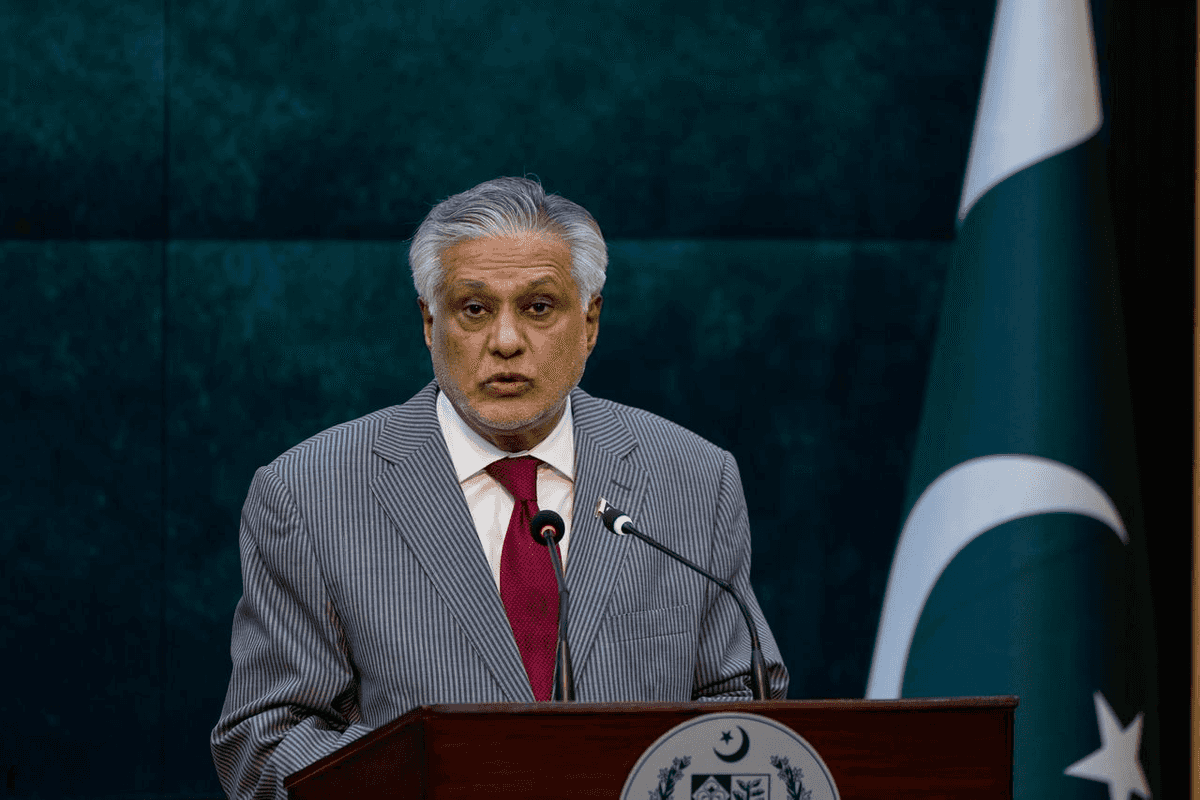
Pakistan stepped up its regional diplomacy on Monday, with Deputy Prime Minister and Foreign Minister Mohammad Ishaq Dar holding separate calls with the Iranian and Egyptian foreign ministers. The consultations came as concerns mounted over reported ceasefire violations in Lebanon and Israel's deepening military operations in the region.
What did Pakistan's FM Ishaq Dar discuss with Iran and Egypt?
Dar spoke with Iranian Foreign Minister Seyed Abbas Araghchi and Egyptian Foreign Minister Badr Abdelatty on the evolving regional situation. Iran raised concerns about Israeli ceasefire violations in Lebanon and asked Pakistan to continue supporting de-escalation efforts. Both calls ended with an agreement to stay in close contact as developments unfold.
During the call with Araghchi, the Iranian foreign minister expressed serious concern over Israeli actions in Lebanon, including reported plans for military action in parts of Beirut. He appreciated Pakistan's diplomatic role and requested Islamabad to keep supporting efforts to maintain the ceasefire. Dar conveyed Pakistan's own concerns and stressed the importance of preserving existing understandings to prevent further escalation.
Why is Lebanon central to the Iran-U.S. negotiations?
Lebanon has become a key sticking point in broader efforts to secure an Iran-U.S. deal. Tehran insists that any lasting framework must also address ongoing military confrontations in Lebanon. Iran's foreign ministry spokesman Esmaeil Baqaei said Monday that a Lebanon ceasefire is an essential condition for any agreement to end Iran's wider war with the United States.
Israeli forces have pushed deeper into southern Lebanon, including seizing Beaufort Castle, prompting an emergency UN Security Council meeting. Israel ordered strikes on Beirut's southern suburbs earlier Monday, targeting the Hezbollah stronghold largely spared from heavy attacks since April.
What is the current state of the Lebanon ceasefire?
A truce to halt the fighting in Lebanon took effect on April 17 but has never held. Both Israel and Hezbollah accuse each other daily of violating the agreement and cite the other's alleged breaches to justify their own attacks. The ceasefire has existed in name only since it began.
Lebanon was drawn into the broader Middle East conflict on March 2, when Hezbollah fired rockets at Israel following the U.S.-Israeli killing of Iran's supreme leader. Since then, Lebanon's health ministry says Israeli attacks have killed more than 3,412 people. Twenty-six Israelis have been killed over the same period, 25 soldiers and one civilian contractor.
How has the international community responded to the Lebanon escalation?
French President Emmanuel Macron, who requested the UN Security Council meeting, said Sunday that nothing justifies the escalation under way in south Lebanon. The European Union called on Israel to stop its military escalation. Lebanese President Joseph Aoun described the situation as "a vicious and reprehensible Israeli aggression."
A senior U.S. official told AFP that Secretary of State Marco Rubio had spoken with both Aoun and Israeli Prime Minister Netanyahu, proposing a clear sequence: Hezbollah must stop all attacks first, after which Israel would refrain from escalating in Beirut. Military delegations from Lebanon and Israel held security talks in Washington on Friday, with further U.S.-brokered negotiations scheduled for Tuesday and Wednesday.
Dar's call with Egyptian Foreign Minister Abdelatty covered the same regional ground. Both ministers emphasized the need for continued diplomatic engagement to promote peace, stability, and restraint. They agreed to maintain close coordination on regional issues going forward.




Comments
See what people are discussing