

Israeli far-right minister says Hamas disarmament deal 'unacceptable'
Ben Gvir slams the Hamas disarmament deal as unacceptable, exposing Israeli divisions over Trump's Gaza roadmap

News Desk
The News Desk provides timely and factual coverage of national and international events, with an emphasis on accuracy and clarity.
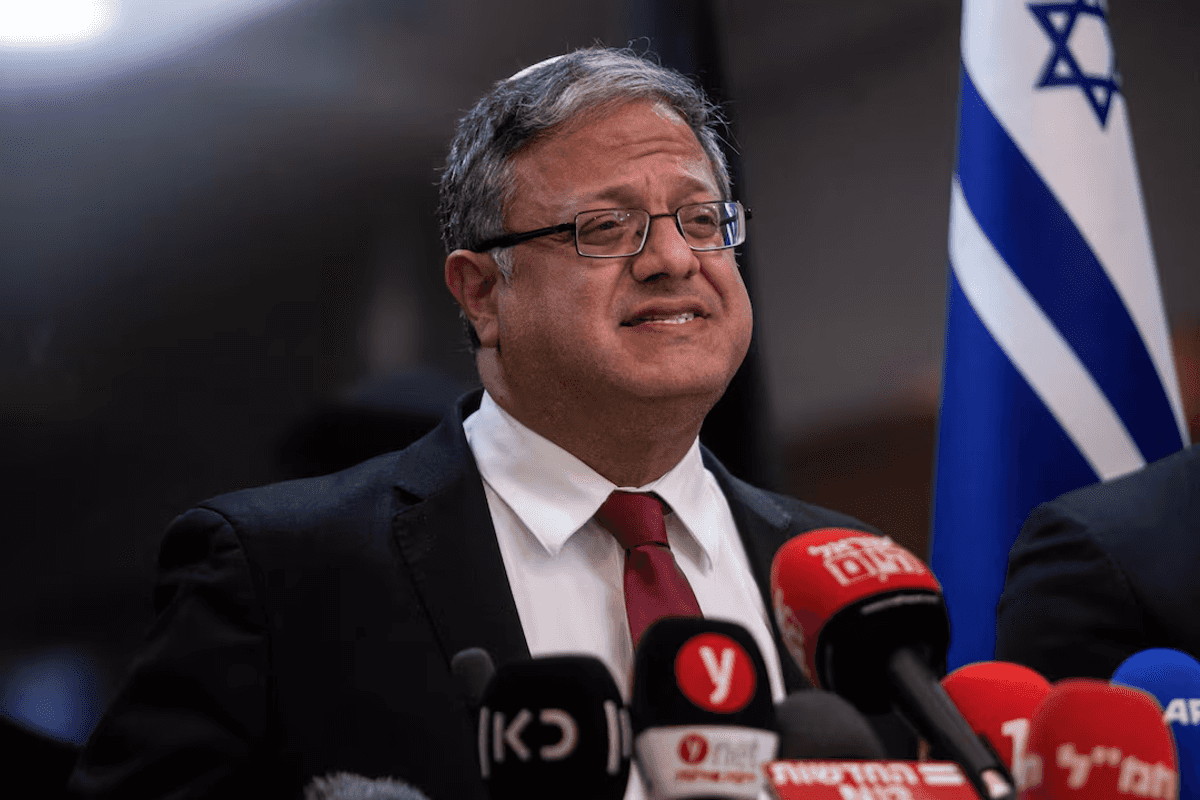
Israel's far-right National Security Minister Itamar Ben Gvir on Friday denounced as "unacceptable" a proposed agreement under which Hamas would surrender its weapons and Israeli forces would gradually withdraw from Gaza.
His remarks underscored divisions within Israel over a U.S.-backed plan to end the war. Ben Gvir said halting targeted killings of Hamas members after the Oct. 7, 2023 attack would allow the group to regroup.
Why does Ben Gvir call the Hamas disarmament deal unacceptable?
Ben Gvir said ending targeted killings of Hamas members would let the group regroup after the October 7, 2023 attack. "After the October 7 massacre, the blood of every Hamas member is on his head," he wrote on Telegram.
"The assassinations in Gaza must continue... Israel must win."
What is the Hamas disarmament deal Trump announced?
Ben Gvir's remarks came after Hamas announced it had accepted a framework unveiled by U.S. President Donald Trump that calls for the group's complete disarmament, the transfer of its weapons to a Palestinian governing committee and a phased withdrawal of Israeli troops from Gaza. Trump had announced late on Thursday that Hamas agreed to "complete disarmament," describing it as a crucial step toward establishing a new Palestinian administration in Gaza. Israel did not immediately respond to Hamas' announcement.
An Israeli political source told AFP that the proposal did not adequately address Israel's demand for the complete demilitarization of Gaza. The source said Gaza was not discussed during Israeli Prime Minister Benjamin Netanyahu's meeting with Trump in Washington earlier this week. Hamas officials said the National Committee for Administration of Gaza (NCAG), established by Trump's Board of Peace initiative, would oversee the storage of the group's weapons.
How has Hamas responded to the disarmament terms?
The movement said it expected international mediators and the Board of Peace to ensure Israel fulfilled its obligations under the agreement, including the gradual withdrawal of its forces from Gaza. Ghazi Hamad, a member of Hamas' negotiating team, said the group was making "concessions for the sake of our people in the Gaza Strip" to end the bloodshed and displacement. "Israel will not intervene in the issue of disarmament. The National Committee is the body that will undertake this task," he said.
What has the Board of Peace said about the roadmap?
The Board of Peace confirmed on X that Hamas had accepted a detailed roadmap for implementing the next phases of the Gaza ceasefire, adding that attention would now shift to implementation. It said the NCAG would soon begin a phased transition toward assuming full administrative authority. Nickolay Mladenov, the Board of Peace's high representative for Gaza, said the agreement followed months of difficult negotiations but cautioned that implementation would determine its success. "What happens next matters even more. Implementation and verification have to be real," he wrote on X, adding that Israel's troop withdrawal and Hamas' disarmament must proceed in parallel.
Trump said earlier that once Hamas is disarmed, Israeli forces would withdraw and an International Stabilization Force, working alongside a new Palestinian police force, would assume responsibility for security in Gaza.
How has the international community reacted to the deal?
European Union foreign policy chief Kaja Kallas welcomed the agreement but warned that significant challenges remained. "A lot needs to fall in place for this to work," Kallas wrote on social media. "Verifying Hamas' compliance will be a significant challenge. Israel would need to eventually withdraw from Gaza. We stand ready to support the next steps."
Egypt's state-linked Al-Qahera News reported that Cairo would soon host a meeting of ceasefire mediators from Egypt, the United States, Qatar and Turkey to discuss implementation of the second phase of the truce. A diplomatic source familiar with the negotiations said the roadmap envisaged the decommissioning of all weapons, the dismantling of tunnels and arms-production facilities, and the phased transfer of authority to a technocratic Palestinian administration. "There will be no exceptions for certain weapons or certain people. One authority, one law, one weapon," the source said, adding that an international verification mechanism would monitor compliance by both sides.
What amendments did Hamas seek before accepting the deal?
Before Hamas announced its acceptance of the deal, a source familiar with the negotiations said the group had submitted amendments to two provisions of the roadmap, including those concerning the handling of weapons.
Some clauses had been removed and alternatives proposed, the source said. Despite a ceasefire that has technically remained in place since October, violence has continued in Gaza. Palestinian health officials said Israeli strikes on Thursday killed at least four people, including two children.



Comments
See what people are discussing