

Middle East enters new era as Pakistan emerges at the center of shifting regional alliances
Kamran Khan says Pakistan is emerging as a key pillar of the Middle East's evolving security and economic order

News Desk
The News Desk provides timely and factual coverage of national and international events, with an emphasis on accuracy and clarity.
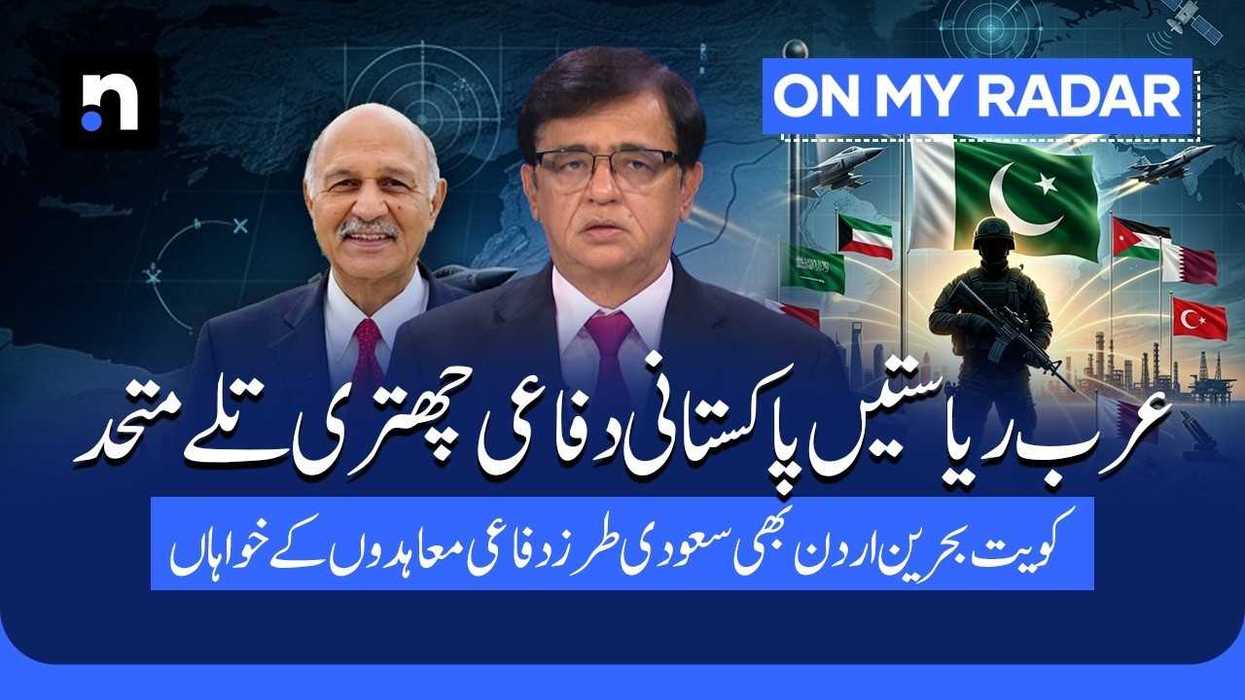
The Middle East is undergoing one of its most significant geopolitical realignments in decades, with new security partnerships, economic ties and strategic alliances reshaping the region's balance of power.
As these shifts gather pace, Pakistan is increasingly positioning itself as a key player by strengthening defense and diplomatic ties with Gulf states, Türkiye and Iran while maintaining relations with major global powers.
Kamran Khan said in the latest episode of On My Radar that the region is entering a new strategic era in which traditional alliances are being redefined. He argued that Pakistan is steadily emerging as a central pillar of the Middle East's evolving security and economic architecture, driven by expanding defense partnerships, growing diplomatic influence and deeper regional economic integration.
One of the latest developments came as Kuwait formally approved a Comprehensive Defense Cooperation Agreement with Pakistan after a gap of three years. The agreement covers military training, intelligence sharing, logistics, defense technology, research and the exchange of military expertise.
According to Pakistani officials, Kuwait is now seeking to expand the relationship beyond the newly approved agreement. Similar to Saudi Arabia, Kuwait is interested in a broader defense partnership with Pakistan that could include the deployment of Pakistani troops, fighter jets, drones, air defense systems and other military capabilities. The development has also attracted attention in India, where defense analysts have highlighted Pakistan's expanding military footprint in the Gulf.
Meanwhile, defense negotiations between Pakistan, Saudi Arabia and Türkiye, which have continued for nearly a year, have entered their final stage. According to Pakistan's Minister for Defence Production, the three countries are close to concluding a defense agreement that is expected to include joint military exercises, defense production, intelligence cooperation and collaboration in advanced defense technologies.
Turkish Foreign Minister Hakan Fidan has also publicly acknowledged the talks for the first time, saying discussions are continuing but that no agreement has yet been signed.
The growing importance of Pakistan-Türkiye ties was underscored by the reception accorded to Pakistan's Chief of Army Staff, Field Marshal Syed Asim Munir, during his visit to Türkiye on July 14. Turkish President Recep Tayyip Erdoğan personally received him at Ankara Airport before the two leaders held closed-door talks on expanding defense cooperation and strengthening strategic relations.
There are also reports that Qatar could join the emerging Pakistan-Saudi defense framework. According to Defence Minister Khawaja Asif, discussions have reached their final stage. Bahrain has also expressed interest in a similar defense arrangement with Pakistan, while Jordan is looking to expand cooperation in military training, defense procurement and broader security collaboration.
Pakistan's growing regional importance extends beyond defense. In recent months, it has also strengthened its diplomatic standing by playing an important role in efforts to ease tensions between the United States and Iran. Islamabad not only helped maintain communication channels between the two countries but also established itself as a trusted mediator. As a result, Pakistan is now among the few countries that maintain effective relations simultaneously with Iran, Saudi Arabia, the United States, China and other Gulf states.
At the same time, Pakistan's relationship with Iran is entering a new phase, with both countries pursuing ambitious plans to expand trade, investment, energy cooperation, border markets and broader economic integration.
Kamran Khan said these parallel developments point to a broader shift in the global balance of power, where economic connectivity, diplomacy and regional security partnerships are becoming increasingly intertwined. He said Pakistan's ability to maintain constructive ties with rival regional and global powers places it in a unique strategic position at a time when the Middle East is being reshaped.
If these defense and economic partnerships materialize, he said, Pakistan could evolve beyond being a regional power to become one of the central pillars of the Middle East's emerging security and diplomatic architecture.



Comments
See what people are discussing