

Pakistan seeks Afghan action on terrorism to advance ECO trade and regional integration
At the ECO Council of Ministers in Islamabad, Ishaq Dar urged Afghan authorities to address terrorism and outlined Pakistan’s five chairmanship priorities
Aamir Abbasi
Editor, Islamabad
Aamir; a journalist with 15 years of experience, working in Newspaper, TV and Digital Media. Worked in Field, covered Big Legal Constitutional and Political Events in Pakistan since 2009 with Pakistan’s Top Media Organizations. Graduate of Quaid I Azam University Islamabad.
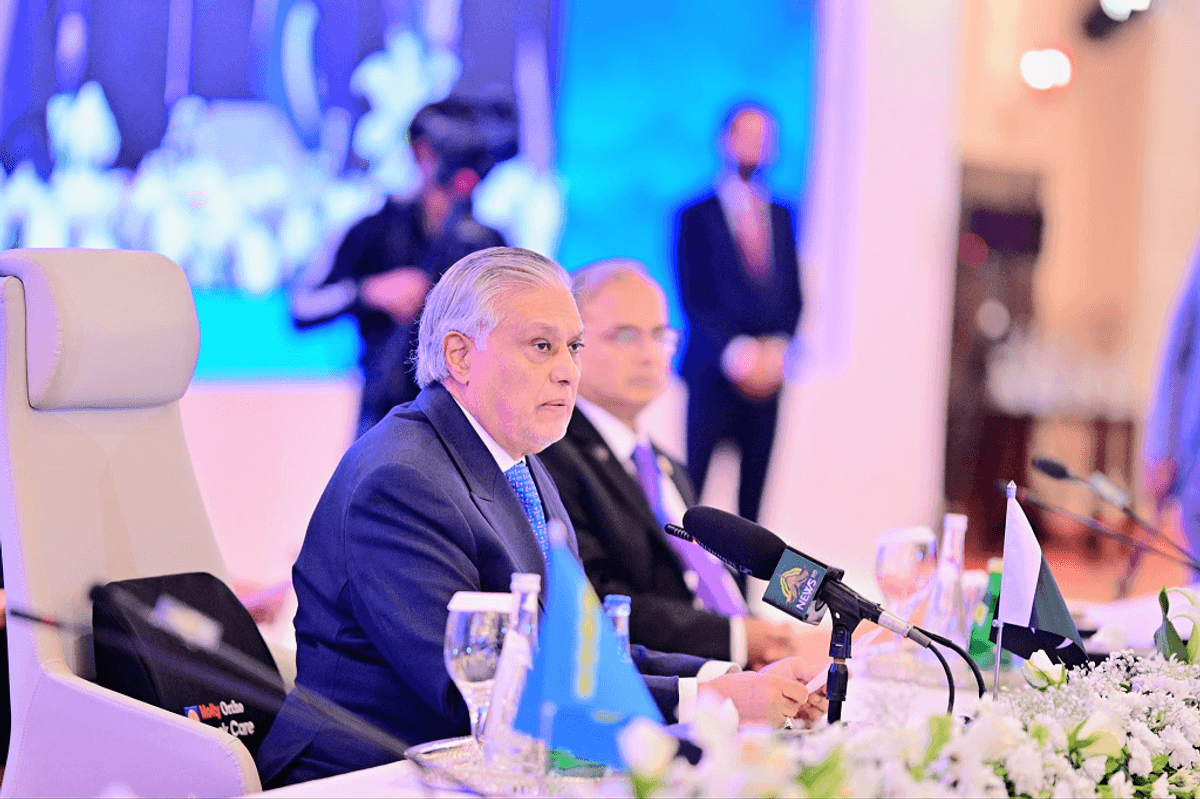
Pakistan said Afghanistan's ECO integration depended on addressing neighbouring countries' security concerns, particularly terrorism.
GOP
Pakistan’s Deputy Prime Minister Ishaq Dar on Monday urged Afghan authorities to address terrorism at the ECO Council of Ministers in Islamabad.
He said regional trade and integration depend on peace, as Pakistan took up the ECO chair for 2026-2027.
What is the Economic Cooperation Organization (ECO)?
The ECO is a regional intergovernmental organization comprising 10 countries: Afghanistan, Azerbaijan, Iran, Kazakhstan, Kyrgyzstan, Pakistan, Tajikistan, Turkey, Turkmenistan and Uzbekistan.
It works to promote economic cooperation among member states, with a focus on expanding regional trade, improving transport and communications links, encouraging investment and supporting sustainable development.
What did Pakistan say about Afghanistan at the ECO Council of Ministers?
Pakistan said Afghanistan’s integration into the ECO depends on Afghan authorities addressing the security concerns of neighboring states, especially terrorism. Dar said Pakistan wants a peaceful, stable Afghanistan within the bloc. He argued that conflict and insecurity disrupt trade routes, energy supplies and investment across the region.
Speaking at the 30th ECO Council of Ministers, Dar said Pakistan wanted Afghanistan to maintain constructive relations with countries in the region. He stressed, however, that Afghan authorities needed to address the security concerns of neighboring states, particularly the threat of terrorism.
A stable Afghanistan, he said, could open up opportunities for regional trade, transit and wider economic cooperation. In this way, he tied security in the country to the broader prospects for regional connectivity.
How is Pakistan engaging with regional partners on peace?
Dar said Prime Minister Shehbaz Sharif, Chief of Defence Forces Field Marshal Asim Munir and the Foreign Office were engaging with regional countries and international partners. The aim, he said, was to promote dialogue, de-escalation and stability.
He reiterated Pakistan’s position that regional disputes should be resolved through dialogue and diplomacy. Such efforts, he added, should follow international law and the United Nations Charter.
What are Pakistan’s priorities for its ECO chairmanship?
Dar outlined Pakistan’s priorities for its two-year chairmanship. He said Islamabad would seek to turn the region’s strategic location, natural resources and commercial potential into expanded trade and shared economic benefits.
The chairmanship, the first under a revised arrangement, will follow the theme “Reviving Regionalism for a Resilient ECO”. Pakistan’s agenda covers five areas: trade and investment, regional connectivity, the ECO Trade Agreement, resilience against shared challenges and human development.
On trade, Dar said Pakistan would pursue wider market access, stronger regional supply chains and greater private-sector participation. Small and medium-sized enterprises are a particular focus. Stronger links between business communities could help boost commerce, investment and employment, he added.
How will Pakistan improve regional transport and the ECO Trade Agreement?
Transport and transit infrastructure will feature prominently, with Pakistan seeking better links between Central Asia, South Asia and its ports on the Arabian Sea. Dar said streamlined customs procedures, more efficient border management and predictable transit arrangements were necessary to make trade corridors commercially viable.
He also called for progress on the ECO Trade Agreement. Dar pointed to a negotiating strategy and roadmap approved by the bloc’s trade ministers in November 2025 as a foundation for modernizing the pact.
Pakistan would support further negotiations to develop a more effective, inclusive and digitally enabled regional trade framework, he said.
What other challenges did Dar raise?
Dar identified climate change, natural disasters and growing pressure on water and energy resources as challenges requiring coordinated regional responses. He called for joint efforts on disaster preparedness, early warning systems, sustainable water management and climate-resilient infrastructure. These, he said, would strengthen member states’ ability to withstand future crises.
He also stressed the importance of investing in the region’s young population through cooperation in education, research, innovation and vocational training. Initiatives to promote entrepreneurship and professional exchanges would support this, he said.
Regional connectivity, Dar said, requires more than roads, railways and trade corridors. Mutual trust and respect for international commitments were equally important to building lasting economic partnerships.
Describing the ECO as a key platform for regional cooperation, Dar urged member states to turn geographic proximity into stronger commercial ties, improved connectivity and sustainable prosperity. Pakistan was ready to work with all member states in a spirit of partnership and mutual respect, he added.




Comments
See what people are discussing