

Pakistan army chief warns of ‘decisive response’ to any breach of territorial integrity
Field Marshal Asim Munir says any direct or indirect threat to country will face a firm response

News Desk
The News Desk provides timely and factual coverage of national and international events, with an emphasis on accuracy and clarity.
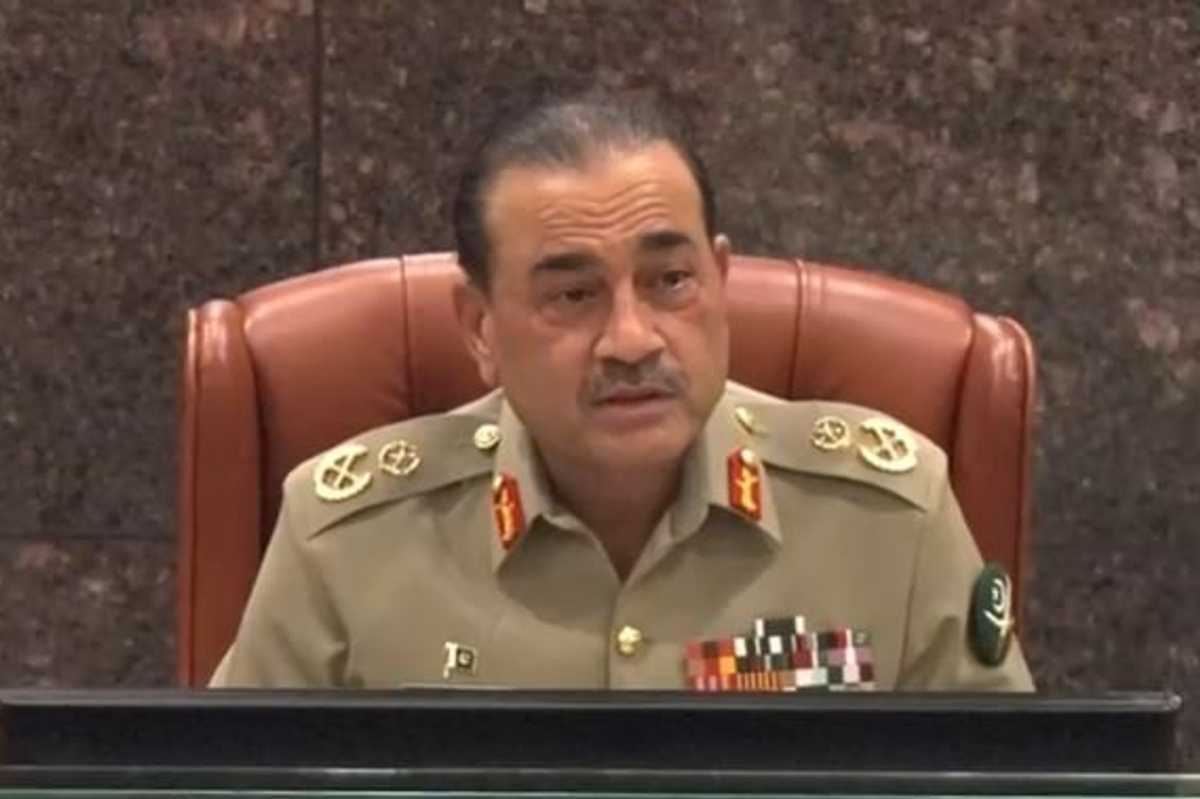
Field Marshal Syed Asim Munir addresses 17th National Workshop Balochistan at the General Headquarters in Rawalpindi on October 21, 2025.
Screengrab
Pakistan’s army chief, Field Marshal Syed Asim Munir, warned on Tuesday that any violation of the country’s territorial integrity would be met with a “firm and decisive response,” even as Islamabad continues to seek peace and stability in the region.
The statement came as Pakistan and Afghanistan agreed to a ceasefire after days of deadly border clashes that left dozens dead — the most serious fighting between the two countries since the Taliban took power in Kabul in 2021.
“The COAS reiterated that while Pakistan seeks regional peace and stability, any violation of its territorial integrity, direct or indirect, will be met with a firm and decisive response to safeguard the lives and well-being of its citizens,” the military’s media wing, the Inter-Services Public Relations (ISPR), said in a statement.
Munir made the remarks while addressing participants of the 17th National Workshop Balochistan at the General Headquarters in Rawalpindi. The event brought together civil and military leaders to discuss development and security challenges in Balochistan, Pakistan’s largest but least developed province.
The army chief described Balochistan as “the pride of Pakistan,” praising its people as resilient and patriotic. He highlighted government efforts to improve the province’s socio-economic conditions through a “people-centric” development approach.
He emphasized that unlocking Balochistan’s economic potential was vital for the country’s prosperity and stability. Munir also underscored the role of civil society and youth in driving sustainable progress, urging them to reject “vested political agendas” that could harm long-term growth.
Turning to security concerns, Munir accused India of supporting groups that seek to destabilize Pakistan. He said “Indian-sponsored proxies,” which he referred to as Fitna al Hindustan (Balochistan Liberation Army) and Fitna al Khawarij (Tehreek-e-Taliban Pakistan), were spreading violence and anti-development narratives in Balochistan.
He reaffirmed that Pakistan’s security forces were taking “all necessary actions” to eliminate militant threats and ensure peace in the province.
Border clashes
Munir’s comments followed a turbulent week of violence along the Pakistan-Afghanistan border. Ground fighting and Pakistani airstrikes erupted after Islamabad accused the Taliban government of harboring militants from the Tehreek-e-Taliban Pakistan (TTP), a banned militant group that has waged a yearslong insurgency to topple the Pakistani government and impose its strict interpretation of Islamic law.
Tensions intensified after a series of explosions in Kabul on October 9, prompting Taliban fighters to attack Pakistani border posts. Pakistan retaliated with cross-border fire, resulting in casualties and property damage on both sides.
The clashes prompted talks in Doha, where Pakistan and Afghanistan agreed to halt hostilities. The negotiations were mediated by Qatar and Turkey, who said follow-up meetings will aim to “ensure the sustainability of the ceasefire and verify its implementation in a reliable and sustainable manner.”
Pakistan’s Foreign Minister Muhammad Ishaq Dar said the next round of talks will be held in Istanbul on October 25 to discuss a framework for enforcing the agreement.





Comments
See what people are discussing