

Pakistan grapple with batting order dilemma ahead of T20 World Cup
Global tournaments are not won by star power alone but through balance, clarity of roles, and teamwork

Zaid Hassan
Producer
Zaid Hassan, a seasoned sports journalist, led Cricket Pakistan as editor for four years, shaping its coverage with insightful analysis. Now a producer at Nukta, he expands into broader storytelling while remaining a key voice in Pakistan’s sports media.
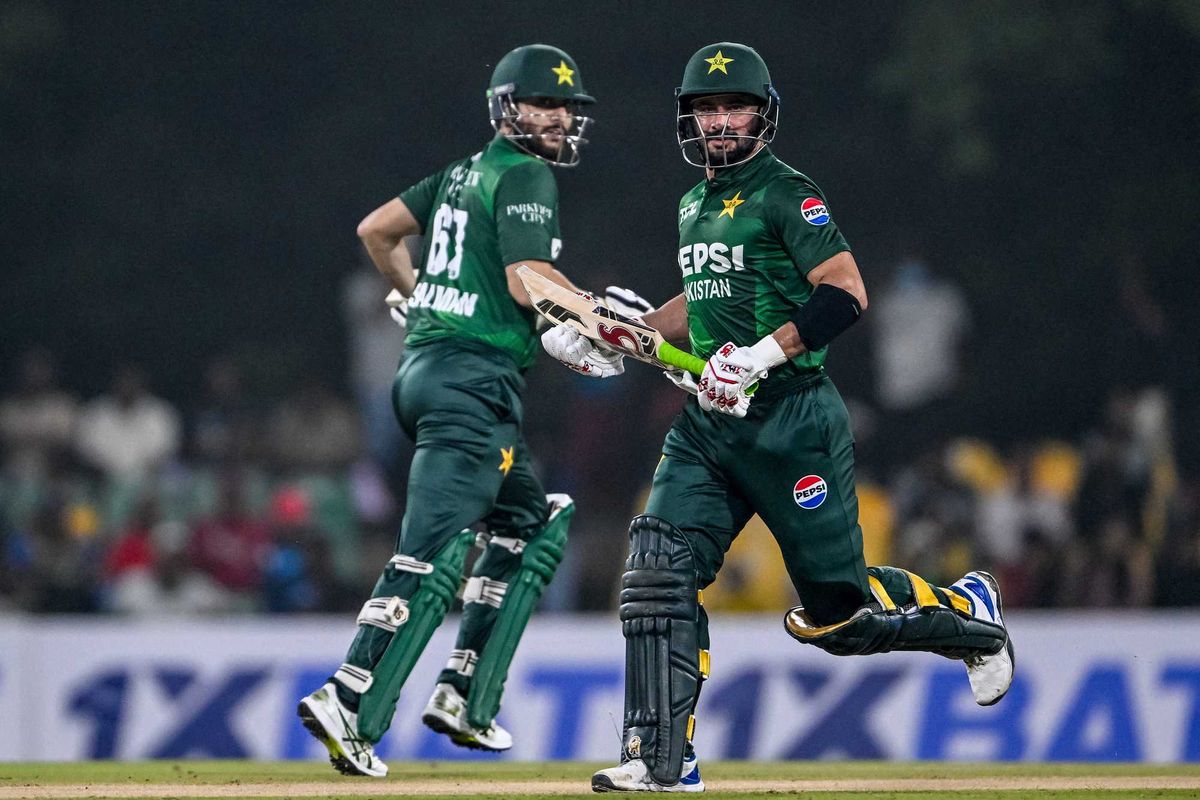
Pakistan's Sahibzada Farhan (R) and captain Salman Agha run between the wickets during the first Twenty20 international cricket match between Sri Lanka and Pakistan at the Rangiri Dambulla International Stadium in Dambulla on January 7, 2026.
AFP
Pakistan’s rain-hit third T20I loss to Sri Lanka was disappointing, but Salman Ali Agha’s explosive 45 off 12 balls has sparked fresh debate about Pakistan’s batting order ahead of the T20I World Cup in India and Sri Lanka starting February 7.
The knock was historic. Agha registered the fastest 45-plus score ever by a captain in T20I cricket and the second fastest across all T20 formats. He narrowly missed breaking Pakistan’s national record for the quickest T20I half-century, which remains with Shoaib Malik, who reached fifty in 18 balls against Scotland in 2021. While the innings did not change the result, it has undoubtedly altered the conversation around Pakistan’s team balance.
What makes Agha’s case stronger is the statistical contrast in his batting positions.
Over the last two years in T20 cricket, Salman has averaged 30 with a strike rate of 142 when batting at number three. In comparison, his numbers at other positions drop to an average of 23 and a strike rate of 117. The difference becomes even starker when looking solely at T20 Internationals.
Batting at number three, Agha boasts a strike rate of 165.42 and an average of 35.4 from six innings. Elsewhere in the order, his strike rate falls to 107.29 with an average of 21.5 across 33 innings.
The problem
The problem for Pakistan, however, is that the number three position is traditionally occupied by Babar Azam. Pakistan’s premier batter missed the Sri Lanka series due to his Big Bash League commitments, allowing Agha to slot in higher up the order. This absence has led fans and experts alike to question whether Pakistan should reconsider Babar’s role in the XI altogether.
Social media discourse has intensified around the idea that accommodating both Babar Azam and Salman Agha in the same lineup could force Pakistan to field two anchors, potentially slowing the scoring rate in high-pressure, high-scoring matches. Given Agha’s numbers, many argue that he is more effective at number three than number four, while Babar’s presence there could limit the team’s explosiveness.
Pakistan coach Mike Hesson has publicly stated that Babar’s ideal position remains in the top order. However, the opening slots appear locked, with Sahibzada Farhan and Saim Ayub both cementing their places. This leaves little flexibility unless Pakistan is willing to reshuffle their core structure.
Further down the order, Pakistan have additional decisions to make. Khawaja Nafay impressed on debut in the third T20I, scoring a brisk 26 off 15 balls while also serving as a wicketkeeper-batter. His performance puts him in direct competition with Usman Khan for the number five slot.
Shadab's return to form
Meanwhile, Shadab Khan’s successful comeback in the Sri Lanka series has strengthened his case for inclusion in the top six. Carrying forward his Big Bash League form, Shadab is likely to bat at six, providing Pakistan with a valuable spin-bowling option alongside Mohammad Nawaz, who slots in at seven.
All-rounder Faheem Ashraf adds further balance to the side, operating as a third seamer at number eight while supporting two frontline pacers and specialist spinner Abrar Ahmed. With most positions seemingly settled, this leaves the number four spot as the most hotly contested role in the lineup.
Fakhar Zaman, despite scoring only five runs in the first T20I at number four, remains a strong contender. Statistically, this is his most productive position in T20Is, where he averages 25.05 at an impressive strike rate of 150.45 across his 115-match career. His ability to counterattack and maintain momentum could be vital in the middle overs.
Pakistan now faces a critical choice. Should they persist with Fakhar Zaman at number four, leveraging his proven strike rate and experience? Or should Salman Agha continue at four to accommodate Babar at his preferred number three position?
Ultimately, whatever decision Pakistan make must serve the collective good of the team rather than succumbing to media narratives or fan pressure. T20 World Cups are not won by star power alone but through balance, clarity of roles, and teamwork.
Pakistan’s success will depend on selecting a batting order that maximizes impact, adaptability, and intent, qualities that could define their campaign in February.



Comments
See what people are discussing