

Pakistan, China sign MoU to develop industrial tomato varieties for local processing
A Chinese research center and Pakistani food processor have signed an MoU to develop industrial tomato varieties in Pakistan, targeting $1 million in annual import savings

Business Desk
The Business Desk tracks economic trends, market movements, and business developments, offering analysis of both local and global financial news.
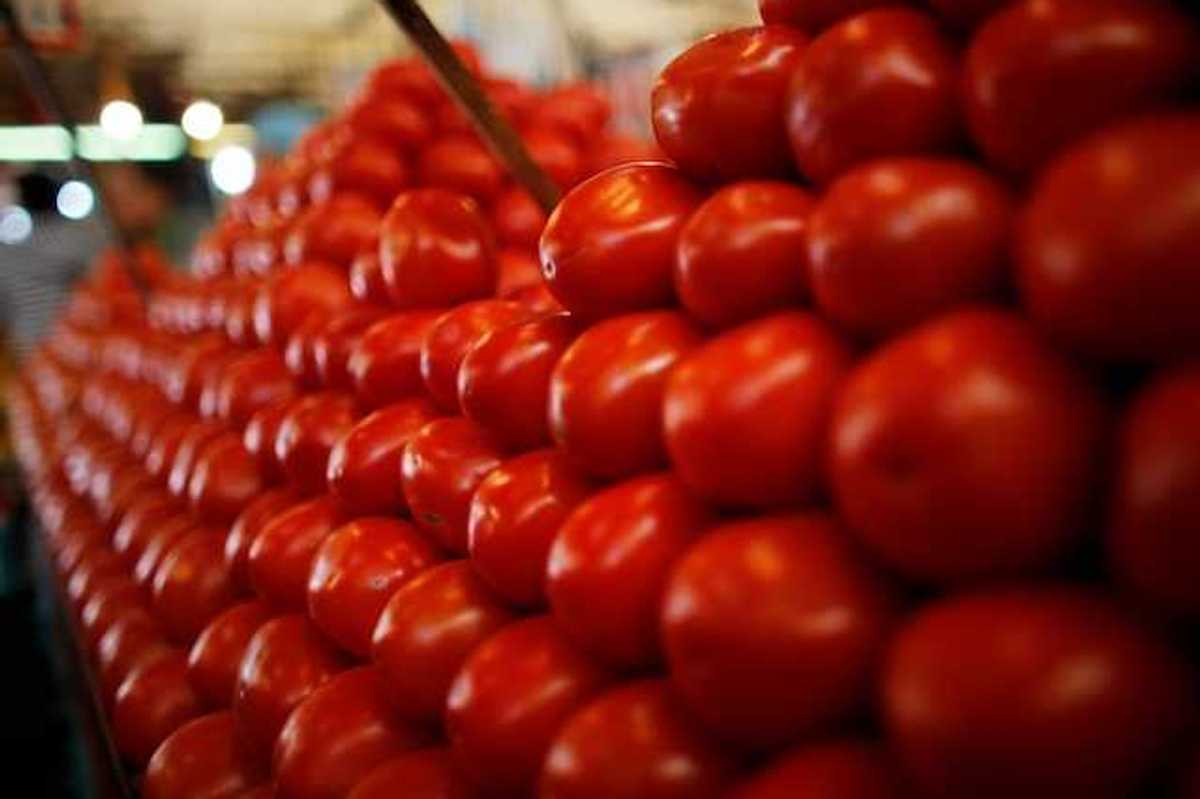
The collaboration begins with a research and development phase in Sindh, where six to seven candidate tomato varieties will undergo field and greenhouse trials.
Reuters/File
A Chinese agricultural research institution and a Pakistani food processing company have signed a memorandum of understanding to develop and introduce industrial tomato varieties suited for processing in Pakistan.
The agreement was signed during Prime Minister Shehbaz Sharif's official visit to China, at a Pakistan-China B2B investment conference held in Hangzhou in May 2026.
What does the Pakistan-China tomato MoU involve?
The MoU pairs Beijing's Jingwa Agricultural Science and Technology Innovation Center with Karachi-based Iftekhar Ahmed Food & Beverages Pvt. Ltd. to identify, trial and commercialize tomato varieties optimized for industrial processing. The focus is on varieties with high Brix levels, strong solids content and improved pulp yield for the production of tomato paste and puree.
Which varieties will be tested and where?
The collaboration begins with a research and development phase in Sindh, where six to seven candidate tomato varieties will undergo field and greenhouse trials. Chinese and Pakistani experts will jointly evaluate each variety for adaptability to local climate conditions, soil characteristics, cultivation practices and disease pressures. The most suitable variety will then be registered in Pakistan and made available to farmers at scale.
The Jingwa Center will transfer agricultural technologies, cultivation techniques and technical expertise aimed at improving tomato productivity and quality. The partnership also targets year-round tomato production through controlled environment agriculture to support stable yields and consistent quality across seasons.
How could this reduce Pakistan's tomato paste imports?
Waheed Ahmed, director marketing of Iftekhar Ahmed Food & Beverages Pvt. Ltd., said locally cultivating industrial tomato varieties could reduce annual spending on imported tomato paste by around $1 million. He added that the initiative could expand exports of value-added agricultural products and attract up to $7 million in investment in local production. Ahmed signed the agreement on behalf of the Pakistani company, with Zhao Guodong, director business development of the Jingwa Center, signing for the Chinese side.
What is the broader goal of the Pakistan-China tomato partnership?
Representatives of both organizations described the agreement as a step toward modernizing Pakistan's tomato value chain and deepening agricultural cooperation between the two countries. The partnership is expected to support import substitution, expand local processing capacity and contribute to food security through a climate-resilient tomato production system in Sindh. Following successful trials, commercial cultivation and industrial processing will proceed with continued technical support from the Chinese side.
Iftekhar Ahmed Food & Beverages Pvt. Ltd., operating under the legacy of Iftekhar Ahmed & Co., exports fruit and vegetable products to more than 30 countries. The company operates an aseptic processing facility for fruit pulps, concentrates and tomato paste, along with a 35,000-metric-ton cold storage network across Karachi and Sargodha.





Comments
See what people are discussing