

Pakistan, Iran foreign ministers discuss regional tensions as Middle East conflict intensifies
Ishaq Dar and Seyyed Abbas Araghchi agree to remain in contact as Iran war with Israel and the US enters seventh day

Aamir Abbasi
Editor, Islamabad
Aamir; a journalist with 15 years of experience, working in Newspaper, TV and Digital Media. Worked in Field, covered Big Legal Constitutional and Political Events in Pakistan since 2009 with Pakistan’s Top Media Organizations. Graduate of Quaid I Azam University Islamabad.
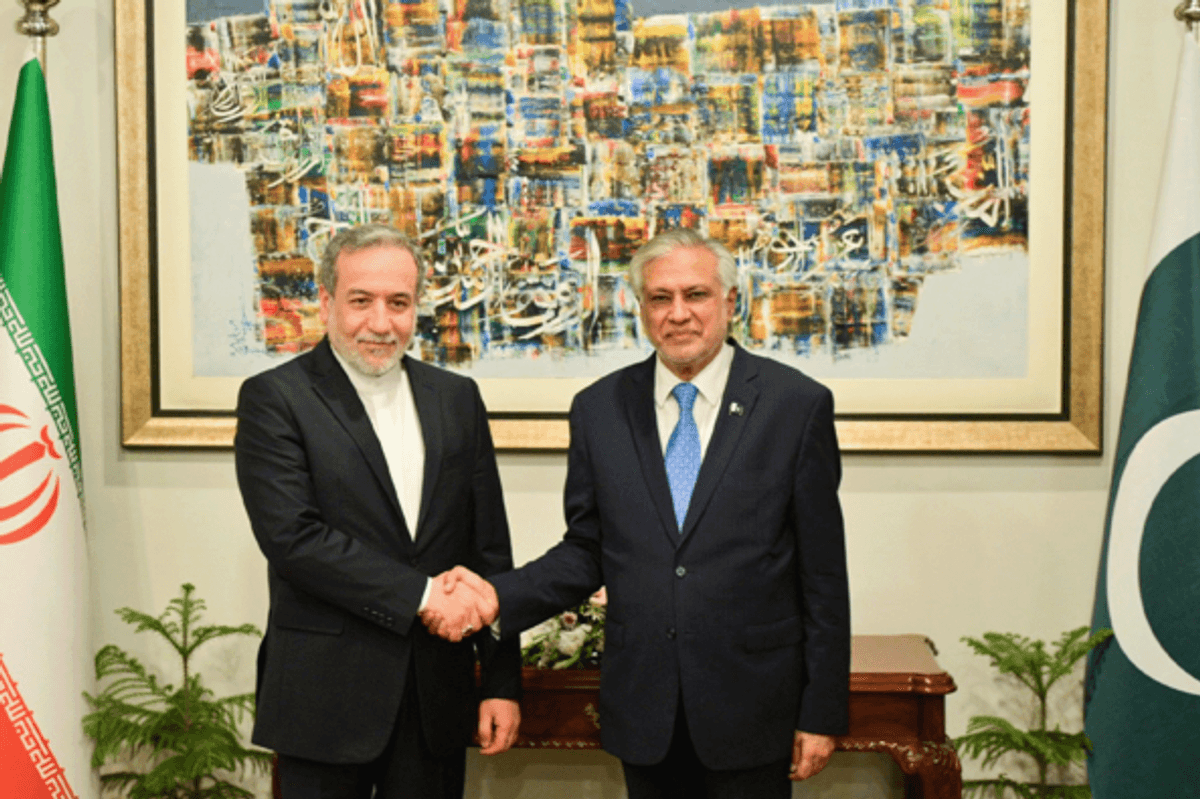
Pakistan’s Foreign Minister, Ishaq Dar (R), shakes hands with Iranian counterpart, Seyed Abbas Araghchi in Islamabad, Pakistan, on May 5, 2025.
Pakistan's Ministry of Foreign Affairs
Pakistan’s Deputy Prime Minister and Foreign Minister Ishaq Dar held a telephone conversation with Iran’s Foreign Minister Seyyed Abbas Araghchi on Friday to discuss the evolving regional situation amid a widening conflict in the Middle East.
According to a statement issued by Pakistan’s Ministry of Foreign Affairs, Dar expressed concern over current regional developments during the call.
Both leaders exchanged views on the situation and agreed to remain in close contact regarding further developments, the statement said.
The conversation comes as regional tensions escalate following a conflict involving Iran, Israel and the United States that has spread across multiple countries in the Middle East.
Earlier Friday, Iran’s President Masoud Pezeshkian said some countries had begun mediation efforts to end the war but stressed that negotiations must address what he described as the origins of the conflict.
“Some countries have begun mediation efforts. Let’s be clear: we are committed to lasting peace in the region yet we have no hesitation in defending our nation’s dignity and sovereignty,” Pezeshkian wrote in a post on X.
“Mediation should address those who underestimated the Iranian people and ignited this conflict,” he added.
Fresh strikes shook Iran and Lebanon on Friday as Israel and the United States intensified attacks. Powerful explosions were reported in Tehran as the war entered its seventh day.
The fighting has drawn in global powers, disrupted energy and transport sectors, and spread instability across the region.
Internet connectivity in Iran dropped to about 1% of normal levels, according to the monitoring group NetBlocks, limiting information about conditions for civilians.
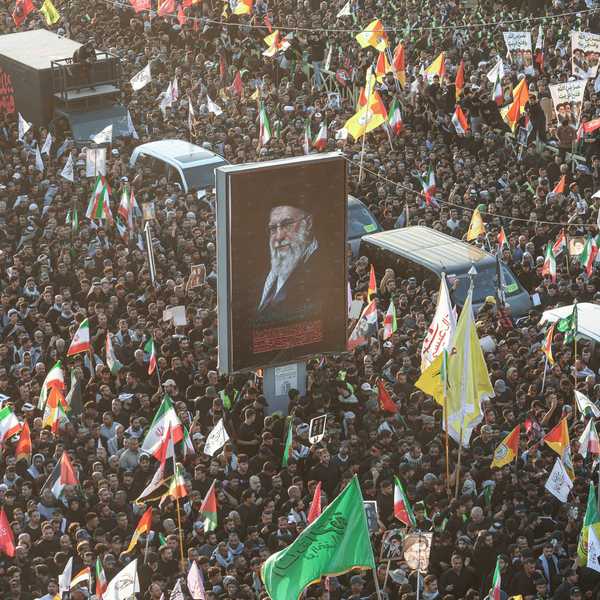
In Tehran, worshippers gathered for the first Friday prayers since the war began. Iranian authorities said Supreme Leader Ali Khamenei was killed on the first day of the conflict.
Footage shared by Iranian media showed crowds dressed in black gathering outside the Grand Mosque of Imam Khomeini. Some carried Iranian flags as a speaker mourned the late leader over a loudspeaker.
“We bear witness that he was the embodiment of piety and guardianship in our time,” the speaker said as worshippers seated on prayer rugs wept.
Friday’s strikes on Tehran followed warnings from Israel and the United States that attacks would intensify.
Israel’s military chief Eyal Zamir said the country was entering the next phase of its operations.
“We have additional surprises ahead which I do not intend to disclose,” Zamir said in a televised statement.
U.S. Defense Secretary Pete Hegseth said “firepower over Iran and over Tehran is about to surge dramatically.”
U.S. President Donald Trump said sending ground troops into Iran would be “a waste of time,” but added he would “have to be involved” in selecting Iran’s next leader.
Iran’s Health Ministry said U.S. and Israeli strikes have killed 926 people, though the figure could not be independently verified by AFP.
Iran has launched missile and drone attacks against Israel and Gulf states since the war began. In Israel, at least 10 people have been killed, according to first responders.
The U.S. military said six American personnel have died since the conflict began Saturday.
Conflict spreads to Lebanon
The fighting has also spread to Lebanon after Hezbollah fired missiles in support of Iran.
Israel struck several towns in southern Lebanon overnight and carried out heavy strikes on Beirut’s southern suburbs, a Hezbollah stronghold that is home to hundreds of thousands of residents.
Video footage showed a fresh strike Friday, sending plumes of smoke rising from a damaged building.
Streets in the area were largely deserted as bulldozers cleared debris from destroyed structures.
Residents fled in large numbers after Israel issued evacuation warnings urging people to leave immediately to save their lives.
Hundreds of displaced families gathered on a beach in Beirut with limited shelter options.
“We fled from the suburbs, we were humiliated,” one resident told AFP, declining to give his name. “We’ll sleep on the road tonight and God alone knows what will happen to us.”
Lebanon’s Prime Minister Nawaf Salam warned the displacement could trigger a humanitarian crisis.
“A humanitarian disaster is looming,” Salam said, adding the consequences could be “unprecedented.”
The United Nations High Commissioner for Refugees said it had declared the crisis a major humanitarian emergency and called for an immediate international response.
The United Nations human rights chief also called for impartial investigations after Iran said a strike on a school killed more than 150 people.
Iran blamed the attack on the United States and Israel, though neither country has confirmed involvement.
U.S. Secretary of State Marco Rubio said the Pentagon was investigating the incident. AFP said it could not independently verify the reported death toll.
Lebanon’s Health Ministry said Israeli strikes have killed 123 people in the country.
Gulf states and global impact
The conflict has also affected Gulf states that have long been considered relatively stable in the region.
Qatar intercepted a drone targeting a U.S. air base early Friday. Saudi Arabia said it shot down three drones east of its capital, Riyadh.
Across Gulf countries, 13 people — including seven civilians — have been killed since the war began.
Among them was Elena Abdullah Hussein, an 11-year-old girl in Kuwait.
The conflict has also extended beyond the immediate region.
A U.S. submarine torpedoed an Iranian frigate near the coast of Sri Lanka, while Azerbaijan threatened retaliation after a drone strike hit an airport there.
Air traffic across the Middle East has been severely disrupted as missiles and drones dominate regional airspace.
Governments have rushed to evacuate tourists and foreign nationals stranded by the fighting.
Global markets have also reacted sharply. Crude oil prices have risen about 20% since the conflict erupted, while shipping through the Strait of Hormuz has nearly halted.



Comments
See what people are discussing