

Pakistan PM, army chief arrive in Switzerland for US-Iran peace talks
Pakistan PM Shehbaz Sharif and army chief Asim Munir arrive in Switzerland for US-Iran peace talks as Lebanon tensions escalate
Aamir Abbasi
Editor, Islamabad
Aamir; a journalist with 15 years of experience, working in Newspaper, TV and Digital Media. Worked in Field, covered Big Legal Constitutional and Political Events in Pakistan since 2009 with Pakistan’s Top Media Organizations. Graduate of Quaid I Azam University Islamabad.

News Desk
The News Desk provides timely and factual coverage of national and international events, with an emphasis on accuracy and clarity.
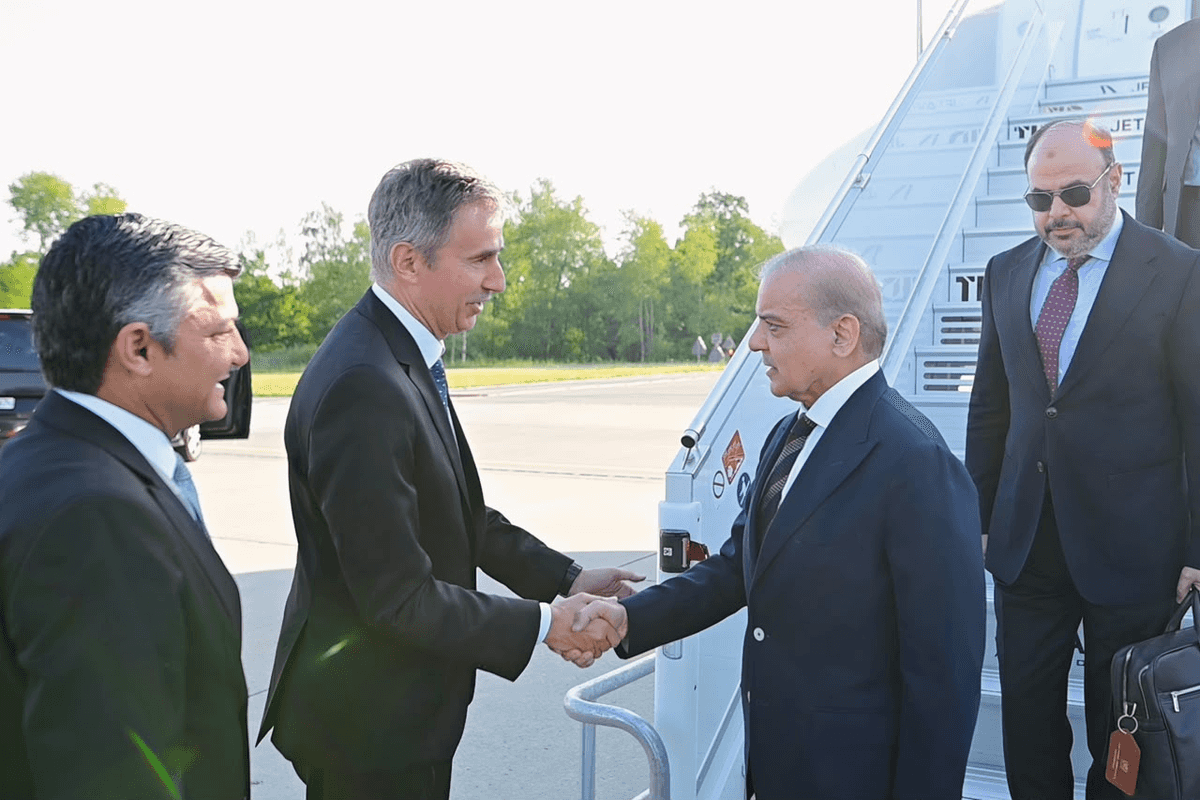
PM Sharif is accompanied by a senior delegation for technical talks under the Islamabad MoU.
PM Office
Pakistan’s Prime Minister Shehbaz Sharif and Army Chief Field Marshal Asim Munir arrived in Switzerland on Sunday for high-level follow-up talks linked to the US-Iran understanding, as tensions in the Middle East escalated again over renewed violence in Lebanon.
Sharif is accompanied by a senior delegation as Islamabad takes part in technical and implementation-focused negotiations stemming from the Islamabad Memorandum of Understanding (MoU).
Officials said the discussions aim to advance commitments under the accord and sustain diplomatic momentum between the United States and Iran.
What is Pakistan's role in the US-Iran talks?
The talks are expected to focus on implementation mechanisms and unresolved technical matters, with Pakistan's participation underscoring what officials described as its role in facilitating dialogue between the parties.
Pakistan also confirmed its leadership was attending alongside other mediators, including Qatar, as negotiations enter a two month phase focused on unresolved issues, particularly Iran's nuclear program.
Who else arrived in Switzerland for the talks?
Their arrival comes as US and Iranian delegations also gathered in Switzerland for a new round of negotiations on the wider Middle East conflict, including the Lebanon ceasefire and Iran's nuclear program.
US Vice President JD Vance, who arrived earlier on Sunday, said Washington's priorities included progress on both files. "Those are the two big things that I think we're going to be focused on," he told reporters.
An Iranian delegation, including Parliamentary Speaker Mohammad Bagher Ghalibaf and Foreign Minister Abbas Araghchi, arrived in Switzerland late Saturday, according to state media and the Swiss foreign ministry. Foreign Ministry spokesman Esmaeil Baqaei said Tehran would press for full implementation of the agreement, warning that "otherwise, the entire understanding will be in trouble," according to IRNA.
Why were the Switzerland talks delayed?
The Swiss talks were initially scheduled to begin on Friday but were postponed after Israel launched strikes in Lebanon following the killing of four Israeli soldiers, triggering renewed clashes between Israeli forces and Hezbollah.
Washington later announced a renewed ceasefire in Lebanon as part of the broader framework agreement with Iran, but fighting resumed over the weekend, with both sides accusing each other of violations.
What is happening with the Strait of Hormuz?
Amid the escalation, Iran announced restrictions on shipping through the Strait of Hormuz, citing what it called Israeli violations in Lebanon and breaches of the ceasefire framework. The strait is a critical global energy route.
US Central Command said maritime traffic through Hormuz remained stable and that American forces were monitoring the situation closely. Trump warned separately that Washington could impose its own measures if negotiations failed to hold.
What is the latest on the Lebanon ceasefire?
On the ground in Lebanon, violence continued despite ceasefire claims. Israel said one soldier was killed in fighting, while reporting continued exchanges with Hezbollah. Lebanese authorities said dozens were killed in Israeli strikes across southern areas, with both sides accusing each other of violations.
Israel insisted it was responding defensively, while Hezbollah claimed its actions were in retaliation for Israeli operations. Civilians in southern Lebanon described growing uncertainty as families prepared for further displacement amid renewed fighting. The latest escalation has raised fresh doubts over the durability of the ceasefire framework agreed earlier this month, as diplomatic efforts in Switzerland attempt to prevent a broader regional collapse.




Comments
See what people are discussing