

Pakistan presents 27th Amendment bill in National Assembly amid opposition protest
The 27th amendment bill requires a two-thirds majority in the National Assembly, held by the ruling coalition.

News Desk
The News Desk provides timely and factual coverage of national and international events, with an emphasis on accuracy and clarity.
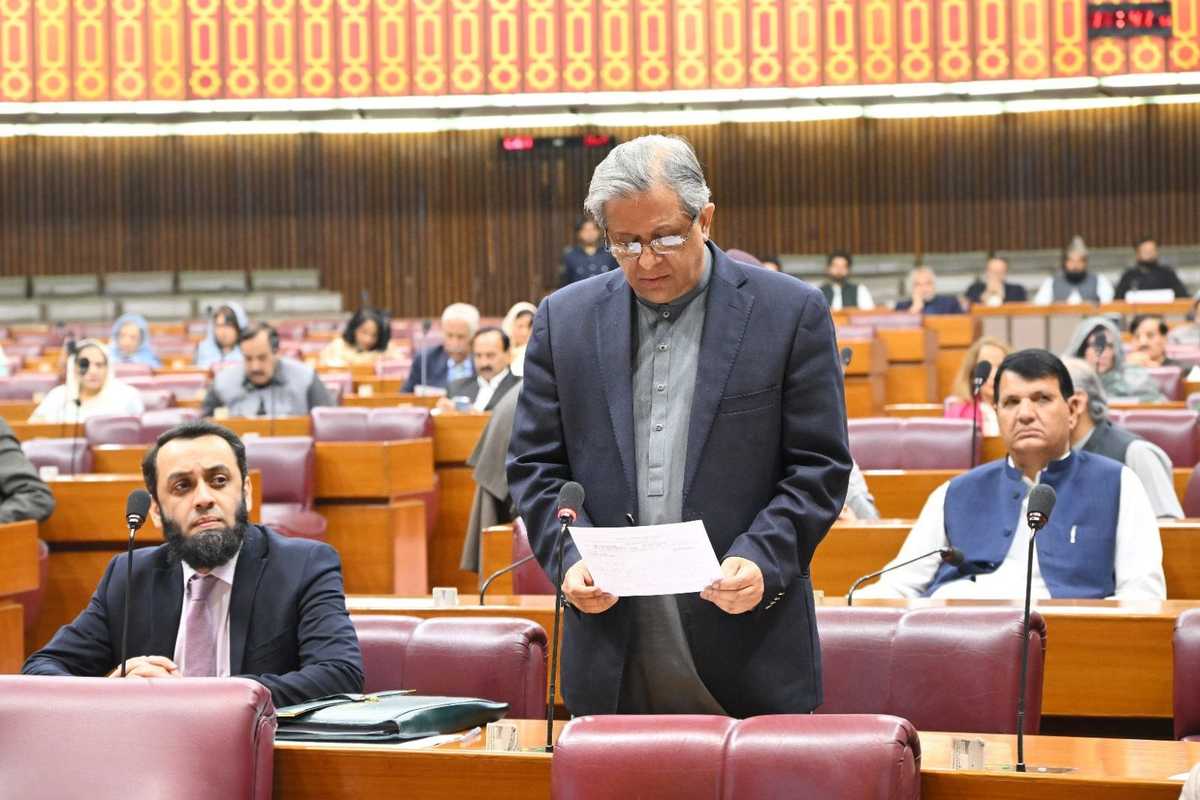
Pakistan Law Minister Azam Nazeer Tarar introduced the bill in the National Assembly for approval on November 11, 2025.
Courtesy: Facebook/National Assembly of Pakistan
Pakistan’s government presented on Tuesday the 27th Constitutional Amendment in the National Assembly, a day after securing its passage in the Senate with a two-thirds majority.
The session, chaired by Speaker Sardar Ayaz Sadiq, began with Law Minister Azam Nazeer Tarar introducing the bill, but proceedings were postponed until Wednesday after hours of speeches by lawmakers.
Tarar told lawmakers the amendment was passed in the Senate with 64 votes. He said opposition parties should have joined the joint parliamentary committee tasked with reviewing the draft.
He said many countries have constitutional courts to handle constitutional matters. In those systems, judges are appointed through judicial commissions. He added that the key point of such a constitutional framework had also been included in the Charter of Democracy.
Two government bills to establish new educational institutions were also scheduled for consideration during the sitting.
- YouTube www.youtube.com
A day earlier, Pakistan’s Senate approved the 27th amendment with the required 64 votes after a heated session marked by opposition slogans and a walkout. No votes were cast against the legislation.
The amendment proposes major judicial and institutional reforms, including the creation of a Federal Constitutional Court. The bill moves closer to becoming law as it now awaits approval from the lower house.
Three senators — Nasima Ehsan of the Balochistan National Party (Mengal), Saifullah Abro from Pakistan Tehreek-e-Insaf and Malik Ahmed Khan of Jamiat Ulema-e-Islam — broke ranks with their parties and voted for the bill. During his remarks, Abro announced he was resigning from his Senate position following the vote.
Despite loud protests and chants of “shame” from opposition benches, no opposition lawmaker formally opposed any of the clauses during voting.
Farooq H. Naik, chairman of the Senate Law Committee, presented the joint report of the Senate and National Assembly committee that reviewed and revised the legislation. He said the committee worked over two days and made several significant changes.
According to Naik, the new Federal Constitutional Court would include equal representation from all provinces. The required experience for high court judges to join the court would be reduced from seven to five years. Supreme Court judges appointed to the new court would retain their seniority.
Other revisions include limiting the Supreme Court’s suo motu powers and changing the process for judicial transfers through the Judicial Commission of Pakistan. Lawmakers also updated the presidential immunity clause.
Under the revised provision, the president would enjoy lifetime immunity from criminal cases. However, if the president assumes a public office after an election, that immunity would be revoked.
Awami National Party Senator Aimal Wali Khan criticized both PTI and PML-N governments for introducing constitutional changes over the past 12 years, and said the PPP had supported them. He called the removal of proposals affecting provincial autonomy, the National Finance Commission and the 18th Amendment “commendable,” adding that his party would support the bill.
Naik thanked lawmakers for cooperation and said the reforms aimed to improve the justice system and ensure institutional balance.
Throughout the session, government and opposition lawmakers closely tracked attendance. Government senators including Anusha Rehman and Sherry Rehman monitored the quorum, while opposition senators Humayun Mohmand and Zeeshan Khanzada counted their members.
Before the vote, Muttahida Qaumi Movement-Pakistan Senator Faisal Subzwari said the amendment would strengthen state institutions, the defense structure and the justice system. He urged reforms that benefit ordinary citizens, calling for faster case resolution and greater empowerment of local governments under Article 140-A.
Notable guests in the Senate gallery included the Balochistan chief minister, Karachi Mayor Murtaza Wahab, Attorney General Anwar Mansoor, Defense Minister Khawaja Asif and other federal ministers.





Comments
See what people are discussing