

Pakistan set for key role as Makkah defense pact gains institutional structure
Kamran Khan says Pakistan is poised to shape the emerging defense partnership in its formative years

News Desk
The News Desk provides timely and factual coverage of national and international events, with an emphasis on accuracy and clarity.
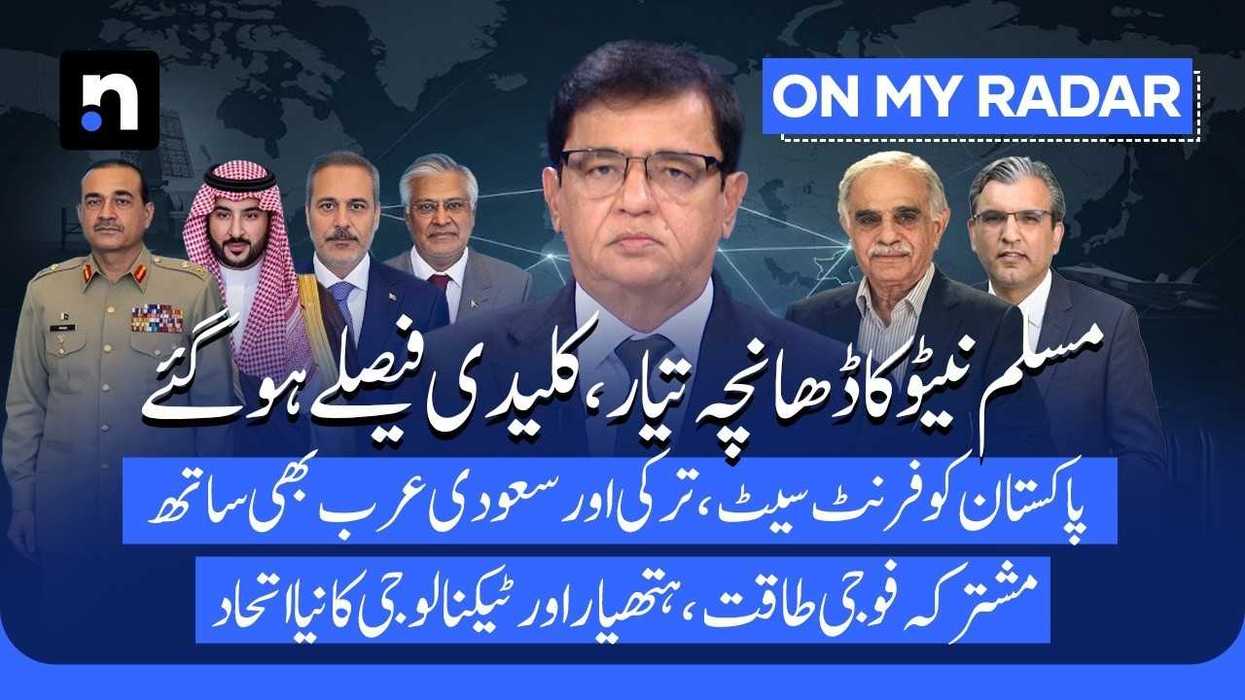
Pakistan, Saudi Arabia and Türkiye have begun putting an institutional framework around their landmark defense pact, signaling a move beyond political commitments towards deeper military coordination, defense-industrial cooperation and collective security arrangements.
Kamran Khan said in the latest episode of On My Radar that the emerging arrangement could eventually resemble a NATO-style Muslim defense alliance, with Pakistan playing a central role in its early development. He said the three countries had agreed in Istanbul that collective defense would extend beyond pledges to include closer military cooperation, joint activities, technology development and defense production.
The Istanbul meeting brought together the foreign and defense ministers and army chiefs of Pakistan, Saudi Arabia and Türkiye under the Strategic Political and Defense Committee. It was the first major meeting since the three countries signed a landmark defense agreement in Makkah on Aug. 7, under which an armed attack on any one of the three countries would be treated as an attack on all three.
One of the key decisions in Istanbul was to establish a permanent secretariat for the alliance in Saudi Arabia. The first secretary-general will be from Pakistan and will serve a three-year term, giving Islamabad a prominent role in building the institutional structure of the emerging framework.
Military cooperation is also expected to deepen. The three countries agreed to enhance coordination and cohesion among their armed forces, conduct joint activities and strengthen their collective defense capabilities.
The more significant long-term development, however, could be cooperation in defense industries. The joint statement refers to joint technology development, defense production and stronger defense-industrial cooperation. This could eventually see the three countries move beyond purchasing weapons to jointly developing and producing advanced military systems, including missiles, drones, ammunition, electronic warfare equipment and air-defense technologies.
The emerging alliance is taking shape against a backdrop of renewed regional tensions. The United States and Iran have resumed attacks following a month-long pause, adding to uncertainty across the Gulf. The three countries, in their joint statement, called for restraint, de-escalation and peaceful resolution of conflicts.
The arrangement does not yet have NATO’s integrated military command structure or a permanent joint force. Nevertheless, the Istanbul meeting indicates that the Makkah defense agreement is moving from a political commitment towards a more structured collective-security framework.
With Pakistan set to provide the first secretary-general and play a leading role in establishing the alliance’s institutions, Islamabad is positioned to have a significant influence over the direction of the emerging defense partnership during its formative years.



Comments
See what people are discussing