

Pakistan's trillion-rupee economy goal hinges on Karachi's development, senator says
Khan said Karachi needed greater government support to unlock its economic potential

Business Desk
The Business Desk tracks economic trends, market movements, and business developments, offering analysis of both local and global financial news.
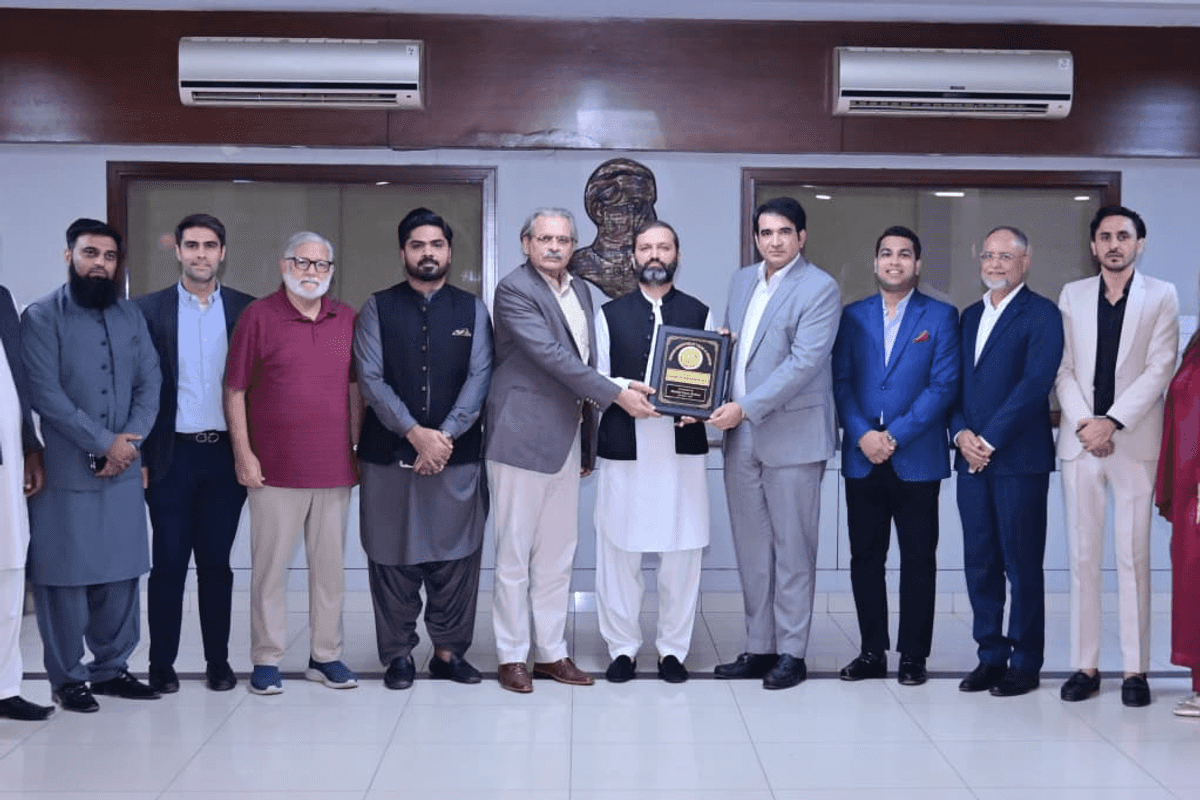
Senator Afnan Ullah Khan said the business community could help bridge the gap between the government and industry
KATI
Pakistan cannot achieve its target of building a 1 trillion rupee economy without addressing Karachi's infrastructure and industrial challenges, a ruling party senator said, calling for greater federal investment and sustained engagement with the country's main commercial hub.
Senator Afnan Ullah Khan, who represents the Pakistan Muslim League-Nawaz (PML-N) and chairs the Privatization Commission, said Karachi had significant economic potential and a skilled workforce but required greater government attention to overcome longstanding problems affecting businesses and industry.
Speaking at a meeting with industrialists and business representatives at the Korangi Association of Trade and Industry (KATI), he said Prime Minister Shehbaz Sharif was committed to improving the city's infrastructure and that the federal government was working to accelerate development initiatives.
Khan said the business community could help bridge the gap between the government and industry, adding that he would raise concerns over electricity and water supplies with federal authorities.
He said the PML-N government had previously played an important role in completing major development projects and improving security in Karachi. Given the city's substantial contribution to national revenue, its development was a responsibility, he added, saying greater electoral support for the party in Karachi could help expand the scope of development projects.
Turning to the government's privatization program, Khan described the sale of Pakistan International Airlines (PIA) as a major challenge, saying earlier attempts in 2017 and 2022 had failed before the process was completed on the fourth attempt.
He said the airline's valuation had been determined through a comprehensive assessment and an independent third-party evaluation, adding that the process had been transparent and that its continued ownership by Pakistani investors was encouraging.
The government had also adopted Turkey's model for privatizing electricity distribution companies, while Islamabad International Airport was among the state-owned assets included in its privatization plans, he said.
Khan said Sukkur and Quetta electric supply companies accounted for around 90% of total losses in the power distribution sector, with Quetta Electric Supply Company alone responsible for approximately 70%, underscoring the need to improve the performance of loss-making utilities.
He also proposed establishing a solar park outside Karachi in partnership with the business community, urging KATI and industrialists to submit practical recommendations for consideration by the prime minister and federal government.
On transport infrastructure, Khan said financial closure had been achieved for the Main Line-1 (ML-1) railway project and work was expected to begin soon. The project would help address longstanding problems with the country's railway tracks, he added.
Earlier, KATI President Sheikh Umer Rehan said Karachi generated more than half of Pakistan's national revenue, while the Korangi Industrial Area contributed around 60% of the city's overall revenue.
Six major export-oriented industries in the Korangi Industrial Zone alone accounted for 5% of Pakistan's total exports, while the area's overall exports had reached $3.1 billion, he said.
Despite its economic contribution, Karachi's industrial sector faced challenges involving federal, provincial and local authorities, Rehan said, adding that high electricity and energy costs were increasing production expenses and undermining the competitiveness of Pakistani goods in international markets.
He called on federal ministers to visit Karachi every month and meet business representatives to address their concerns directly. Citing the monthly visits of the Federal Board of Revenue chairman on the prime minister's instructions, he said a similar approach by federal ministers could help accelerate the resolution of industrial and economic issues.
Regular visits by the prime minister and federal ministers would also strengthen business confidence and help unlock Karachi's economic potential, he added.
KATI Deputy Patron-in-Chief Zubair Chhaya said the country's economic progress was closely tied to Karachi's development, arguing that the city deserved the same level of government attention as other major urban centers.
He said Karachi's industrial development had begun soon after independence, when Pakistan's founder Muhammad Ali Jinnah laid the foundation stone of Valika Textile Mills. However, the city had since faced prolonged periods of lawlessness, deteriorating infrastructure and corruption.
Despite these challenges, Karachi continued to contribute around 60% to the national economy and generated approximately 95% of the Sindh Revenue Board's collections, Chhaya said.
He cited development in Punjab under PML-N leadership as an example of what sustained political attention could achieve, saying Karachi needed similarly focused initiatives. He expressed hope that Khan would take up the city's concerns with the federal government.
Chhaya also called for reforms in the railway sector, saying an efficient freight transportation system could generate revenue, reduce businesses' logistics costs and ease pressure on roads from heavy vehicles.
He said the federal government currently provided around Rs64 billion in grants to support railway operations and cover losses, arguing that an effective freight network could help make the sector financially sustainable.
A stronger railway freight system would provide businesses with a cheaper transport option, reduce road congestion and help lower Pakistan's diesel import bill, he added.




Comments
See what people are discussing