

Pakistan intensifies mediation efforts as US-Iran peace signals reemerge
Kamran Khan says regional diplomacy is accelerating to prevent another Iran conflict escalation

News Desk
The News Desk provides timely and factual coverage of national and international events, with an emphasis on accuracy and clarity.
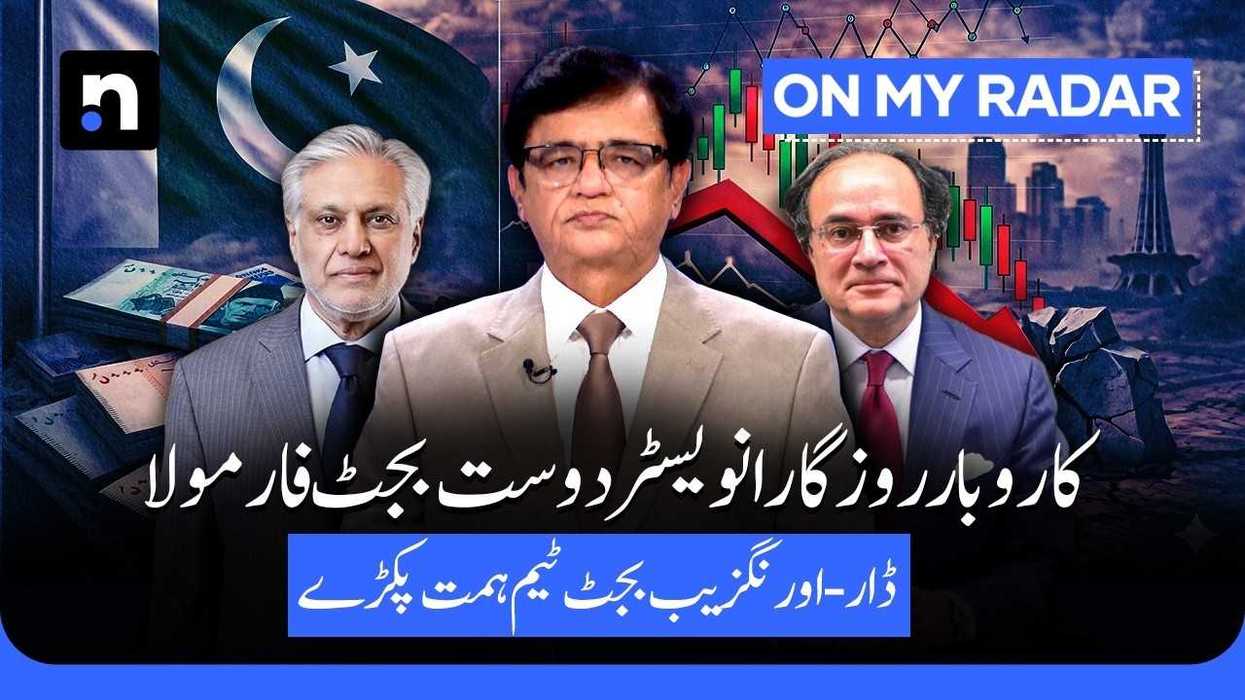
Kamran Khan says signs of a possible peace understanding between the United States and Iran are growing stronger as regional diplomacy intensifies behind the scenes.
Speaking during an episode of “On My Radar,” Khan cited multiple international media reports suggesting Pakistan is playing an increasingly active role in efforts to bridge differences between Washington and Tehran.
According to Iranian media and Saudi-owned Al Arabiya, Pakistan Army Chief Field Marshal Asim Munir could travel to Tehran as part of mediation efforts aimed at narrowing gaps between the U.S. and Iran.
Khan said Iran’s ISNA news agency reported the proposed visit would focus on helping both sides move toward a formal understanding. He added that Reuters also reported Munir was expected to decide whether to travel to Tehran under ongoing mediation efforts.
Quoting Reuters, Khan said three Pakistani sources familiar with the discussions confirmed that communication channels with various Iranian stakeholders were active in an attempt to streamline messages and accelerate diplomatic engagement.
The same sources said growing concern over President Donald Trump’s diminishing patience was pushing mediators to speed up efforts between different parties.
Khan said Pakistani sources also confirmed to him that any final decision regarding Munir’s Tehran visit would depend on the outcome of consultations and a final assessment from Iran.
The comments came a day after Pakistani Interior Minister Mohsin Naqvi visited Iran for the second time and held meetings with Iranian President Masoud Pezeshkian and commanders of Iran’s Islamic Revolutionary Guard Corps shortly after arriving in Tehran.
Khan said Trump had also indicated that countries involved in mediation were working on a possible “Letter of Intent” that could formally end the conflict between Washington and Tehran.
Under the proposed framework, a 30-day negotiation period would begin, focusing on Iran’s nuclear program and the reopening of the Strait of Hormuz, one of the world’s most critical oil shipping routes.
Trump also suggested the door to diplomacy remained open, while warning that action could come swiftly if Iran failed to provide what he described as the “right answer.”
Khan said Iran had confirmed it was reviewing new proposals from Washington. Iranian Foreign Ministry spokesperson Esmaeil Baghaei said messages between the U.S. and Iran were continuing through Pakistan.
According to Baghaei, several exchanges had already taken place based on Iran’s earlier 14-point draft proposal, while Tehran was now evaluating the latest American position.
Khan also referred to an Axios report claiming Pakistan and Qatar had prepared a revised peace memorandum with support from other regional states to reduce differences between Washington and Tehran.
According to the report, Pakistan, Qatar, Saudi Arabia, Turkey and Egypt had spent recent days trying to make the proposal acceptable to all sides. Qatar reportedly sent a delegation to Tehran for talks with Iranian officials, while Saudi Arabia publicly backed Pakistan’s mediation efforts.
Saudi Deputy Foreign Minister Faisal bin Farhan Al Saud said Riyadh wanted Iran to seize the opportunity for negotiations and avoid further escalation.
Khan said China had also endorsed Pakistan’s role, with Beijing describing Islamabad as a “fair and balanced mediator” capable of contributing to regional peace.
At the same time, differences between the U.S. and Israel over Iran appear to be widening.
Citing CNN and Axios reports, Khan said Trump and Israeli Prime Minister Benjamin Netanyahu held a tense phone call on Tuesday regarding Iran.
During the roughly hourlong conversation, Netanyahu reportedly pushed for renewed military action against Iran, while Trump continued exploring the possibility of a diplomatic agreement.
Khan quoted an unnamed American source as saying Netanyahu appeared furious after the call. Trump later told reporters that Netanyahu would “do whatever I want him to do” regarding Iran policy.
Khan said domestic political pressure on Trump was also increasing ahead of November’s midterm elections, particularly after rising fuel prices contributed to declining approval ratings.
He said the White House appeared eager to avoid a prolonged and costly conflict at a time of mounting economic pressure.
Meanwhile, global energy markets showed signs of stabilization despite ongoing tensions.
Khan said two supertankers carrying Iraqi oil to China and another tanker transporting Kuwaiti oil to South Korea had recently crossed the Strait of Hormuz. Together, the vessels were carrying nearly 6 million barrels of oil, marking the largest single-day export volume from the Gulf since February.
Reuters reported that at least 54 ships crossed the strait last week, while Iran said 26 vessels had passed through in the previous 24 hours alone.
Khan said the risk of conflict in the region had not fully disappeared, but back-channel diplomacy, regional mediation and efforts to restore trade routes were accelerating simultaneously.
He added that not only the U.S. and Iran, but the wider Middle East, global oil markets and major world powers were now waiting to see whether the diplomatic process could produce a broader agreement.



Comments
See what people are discussing