

Pakistan's weekly inflation eases to 14.5% in first decline since Feb
Week-on-week, Sensitive Price Indicator rises by 0.47%

Business Desk
The Business Desk tracks economic trends, market movements, and business developments, offering analysis of both local and global financial news.
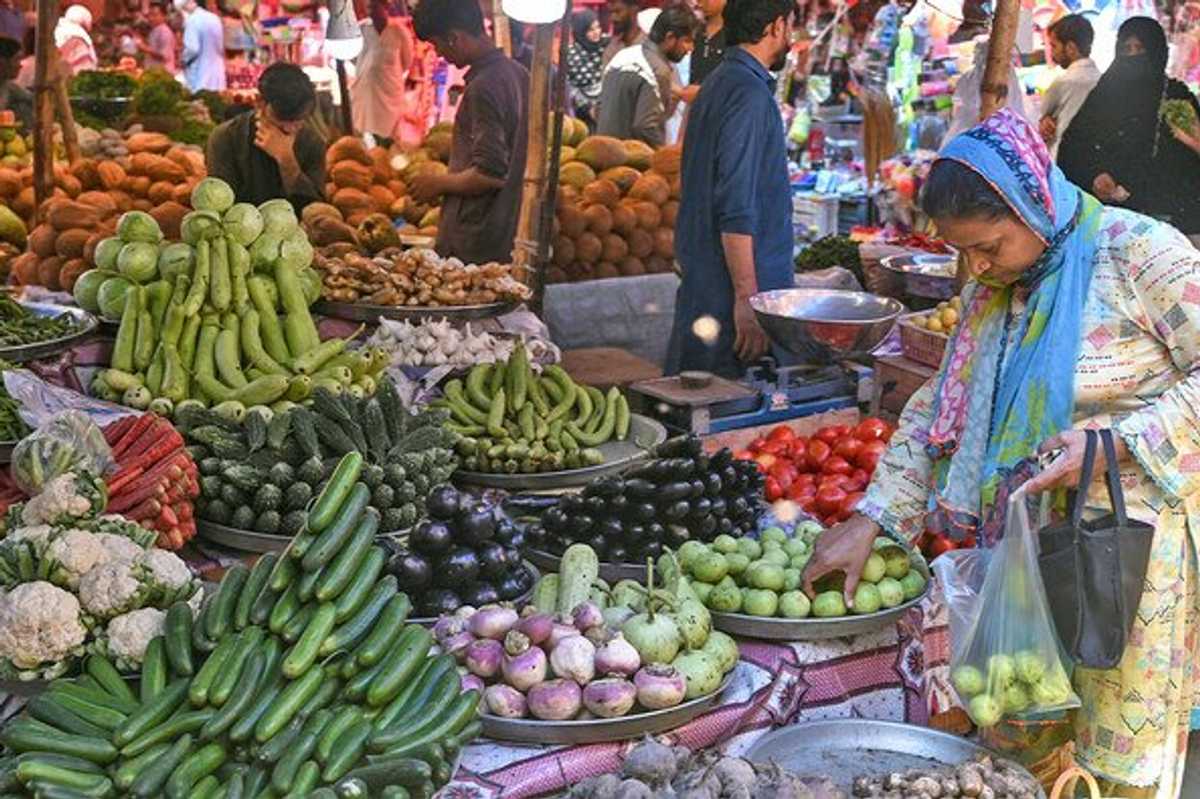
Pakistan's weekly inflation eased to 14.52% year-on-year in the second week of May, down from 15.16% the previous week, as chicken and egg prices declined despite continued increases in fuel and wheat flour costs.
On a week-on-week basis, the Sensitive Price Indicator (SPI) rose by 0.47%, driven primarily by a sharp 22.13% surge in tomato prices.
The cooling of annual inflation comes after a period of intense pressure.
The SPI has gradually risen from 4.2% in February to over 15% in May.
Last month, Pakistan's headline inflation jumped to 10.9%, the first double-digit reading since 2024.
Which items saw the biggest price movement?
According to the Pakistan Bureau of Statistics, petrol prices surged 64.23% year-on-year. Diesel followed closely with a 61.61% increase. Wheat flour prices rose 57.56% over the same period.
Electricity charges for the first quarter increased by 52.58%. Onions saw a price hike of 50.06%. These essential items continue to drive the cost of living higher.
Chicken prices dropped by 6.34% during the week. Eggs also became 3.83% cheaper. Garlic prices decreased by 2.20%.
On an annual basis, potatoes fell by 43.07%. Pulse gram prices dropped by 21.33%. Sugar also saw a 15.04% decrease.
LPG prices dipped by 1.23% this week. Pulse mash prices fell slightly by 0.63%. These drops provided minor relief to household budgets.
How does the Sensitive Price Indicator impact the economy?
The SPI tracks 51 essential commodities from 50 markets across 17 cities. It serves as a key gauge for short-term inflation trends. During this week, 23 items increased in price.
Nineteen items remained stable in the SPI basket. Only nine items saw a price decrease. This indicates that inflationary pressure remains widespread.
The State Bank of Pakistan recently raised interest rates to 11.5%. This was the first hike since June 2023. Higher rates aim to curb rising prices.
What is the inflation outlook for Pakistan in 2026?
Middle East tensions have increased global fuel prices. This has raised freight and insurance costs for Pakistan. Global supply shocks are affecting cross-border trade.
The central bank expects inflation to stay in double digits. It will likely remain above the 5-7% target range. Most of the fiscal year 2027 will see high prices.
Real GDP growth should stay between 3.75% and 4.75%. However, geopolitical developments pose a significant risk. The outlook for consumers remains challenging.


Comments
See what people are discussing