

Pakistan's Finance Ministry expects April inflation at 9% against analysts' double-digit forecast
Ministry cites Middle East supply chain risks despite stable fundamentals

Business Desk
The Business Desk tracks economic trends, market movements, and business developments, offering analysis of both local and global financial news.
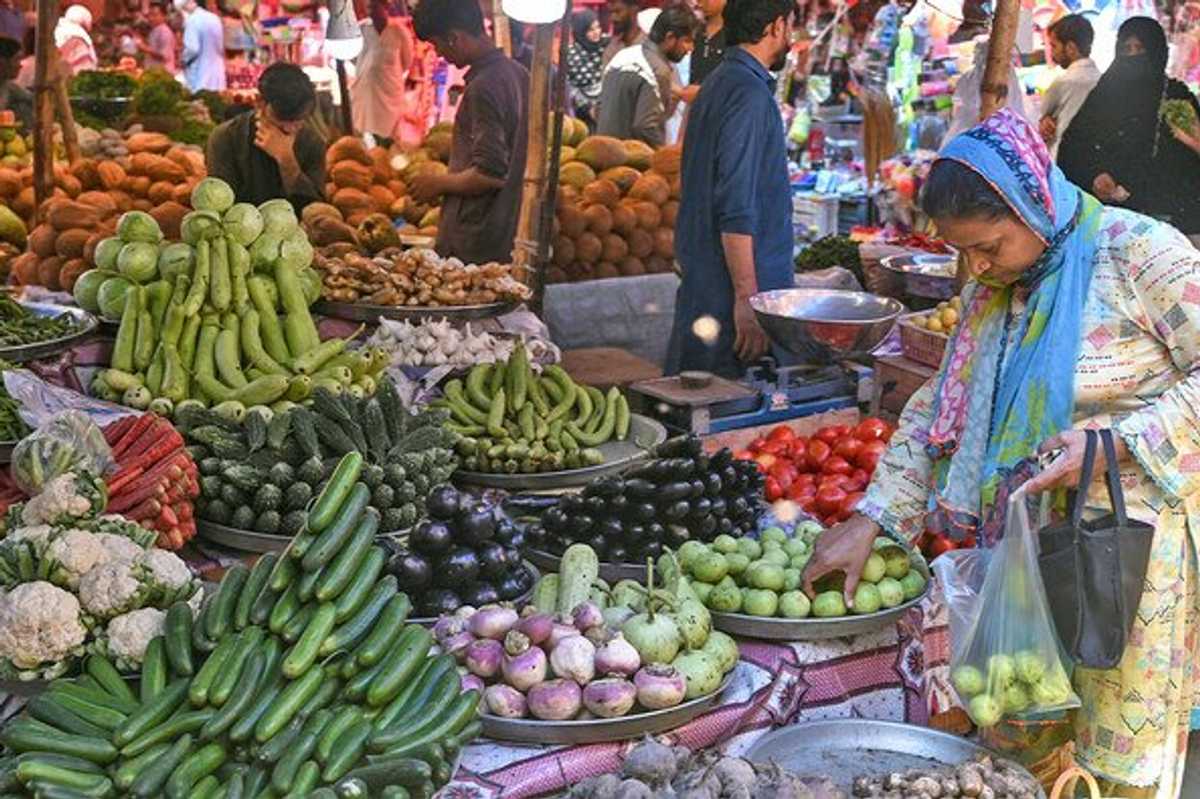
The report says the Q3 FY2026 was underpinned by macroeconomic stability
AFP
Pakistan's Ministry of Finance projected April inflation at 8 to 9%, up from 7.3% in March, in its Monthly Economic Outlook released Thursday.
The report cited ongoing Middle East conflict, rising global commodity prices, and supply chain disruptions as key risks, while noting that the economy completed the third quarter of FY2026 on a stable footing.
This was in sharp contrast to analysts’ expectations of double-digit inflation.
A Nukta survey of analysts from Pakistan's leading brokerages put the average inflation forecast at 10.2% for April, which would mark the first double-digit reading since July 2024.
The divergence between the ministry's projection and market estimates reflects uncertainty over the full pass-through of higher energy costs into consumer prices.
How did Pakistan's economy perform in Q3 FY2026?
The report said the Q3 FY2026 was underpinned by macroeconomic stability and gradually strengthening growth momentum.
Large-scale manufacturing maintained its growth trajectory, with a broad-based recovery in the automobile sector. Rising cement dispatches also pointed to improving domestic demand.
The external sector recorded three consecutive monthly current account surpluses, driven by strong remittances and rising IT exports.
Prudent fiscal management enabled continued improvement in the fiscal position, with the primary surplus reaching 3.3% of GDP during the first eight months of the fiscal year. GDP growth is projected at 4% for the full fiscal year.
What external risks is Pakistan's economy facing?
The Middle East conflict poses the most significant near-term risk, with potential spillovers through higher global energy costs, import bill pressures, and supply chain disruptions.
Despite this, the ministry assessed that Pakistan is better positioned to manage external stress than in previous episodes of similar global shocks.
The timely repayment of Eurobonds, the successful IMF staff-level agreement, and Fitch's B- rating with a stable outlook have reinforced external credibility.
The ministry said the government's proactive policy response aims to minimize the adverse impact of global shocks on domestic supply chains. The overall economic trajectory is expected to remain firm, supported by strengthening macroeconomic fundamentals.




Comments
See what people are discussing