

Saudi Arabia launched covert attacks on Iran as regional war widened
Saudi Arabia secretly struck Iran in late March, becoming the first Gulf state known to have hit Iranian soil.

News Desk
The News Desk provides timely and factual coverage of national and international events, with an emphasis on accuracy and clarity.
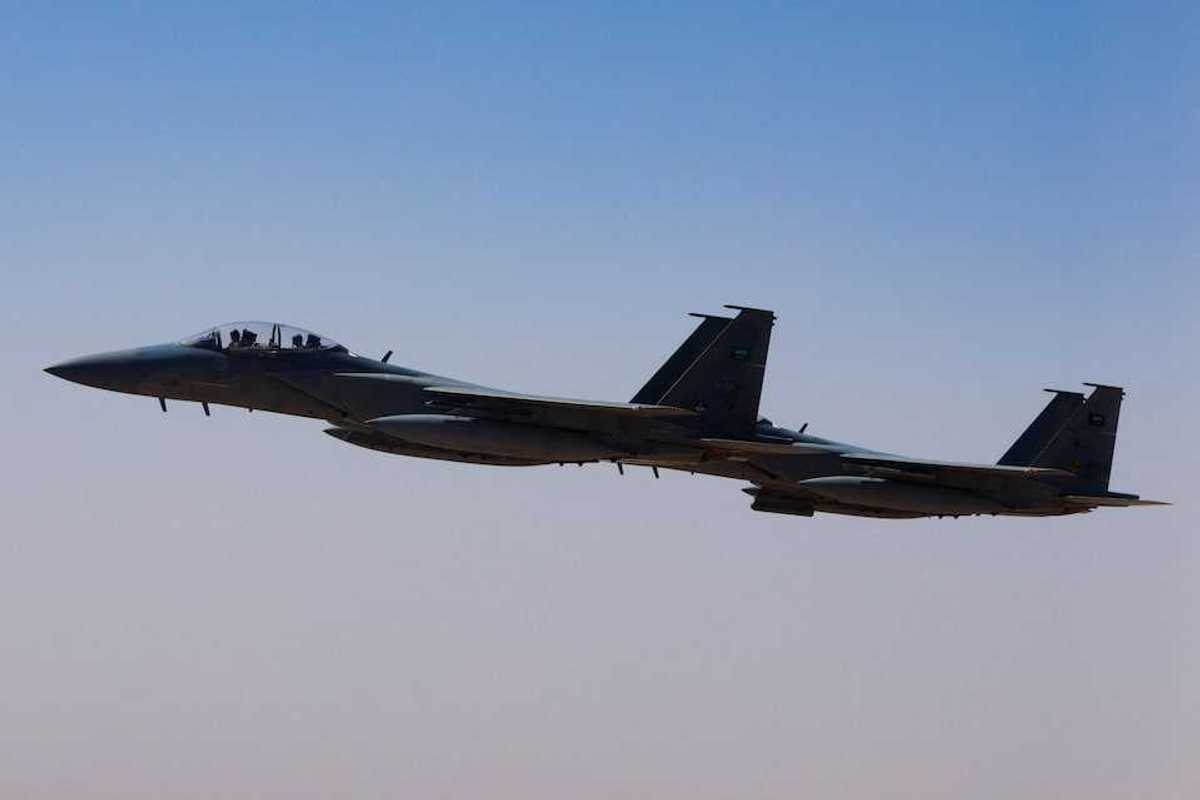
A Saudi fighter jet accompanies Air Force One, carrying U.S. President Donald Trump, on approach to the King Khalid International Airport in Riyadh, Saudi Arabia, May 13, 2025.
Saudi Arabia carried out a series of unpublicized military strikes on Iran in late March, retaliating for Iranian attacks on the kingdom during the widening Middle East conflict.
Two Western officials and two Iranian officials told Reuters about the strikes. The Saudi Air Force conducted the operations, according to the Western officials.
What were Saudi Arabia's covert strikes on Iran?
Saudi Arabia's covert strikes on Iran marked the first known direct Saudi military action on Iranian soil.
The Saudi Air Force carried out the attacks in late March in response to Iranian strikes on the kingdom. Reuters said it could not independently confirm what targets were hit.
A senior Saudi Foreign Ministry official did not directly address whether strikes had occurred when Reuters sought comment. Iran's Foreign Ministry also did not respond.
What triggered the Saudi decision to strike Iran?
The strikes came after the United States and Israel launched airstrikes on Iran on February 28, widening an already volatile regional conflict.
Iran responded by firing missiles and drones at all six Gulf Cooperation Council states, hitting U.S. military bases, civilian sites, airports, and oil infrastructure. Iran also closed the Strait of Hormuz, disrupting global trade.
Saudi Arabia was not the only Gulf state to respond militarily. The United Arab Emirates also carried out strikes on Iran, according to a Wall Street Journal report cited by Reuters.
How did Saudi Arabia and Iran pull back from the brink?
Ali Vaez, Iran project director at the International Crisis Group, told Reuters that retaliatory Saudi strikes followed by de-escalation would reflect a pragmatic recognition on both sides that uncontrolled escalation carries unacceptable costs.
Saudi Arabia and Iran later reached an informal understanding to reduce tensions. Washington and Tehran agreed to a ceasefire on April 7.
One Iranian official told Reuters the understanding aimed to cease hostilities, safeguard mutual interests, and prevent further escalation.
What happened to Iranian attacks on Saudi Arabia after the strikes?
The informal understanding produced measurable results. According to a Reuters tally of Saudi Defense Ministry statements, attacks on Saudi Arabia dropped from more than 105 drone and missile strikes during March 25-31 to just over 25 during April 1-6.
Western sources assessed that projectiles fired at Saudi Arabia before the broader ceasefire had originated in Iraq rather than Iran directly.
Saudi Arabia summoned Iraq's ambassador on April 12 to protest the attacks launched from Iraqi territory.
How did Pakistan and diplomacy shape the outcome?
Saudi Arabia considered retaliatory action against Iran and Iraq after another wave of drone and missile attacks on April 7-8. Pakistan deployed fighter jets to reassure the kingdom and urged restraint as diplomatic efforts continued, Reuters reported.
By the end of March, a combination of diplomatic contacts and Saudi threats of stronger retaliation had already contributed to the de-escalation understanding, according to Western sources cited by Reuters.
What is the broader Saudi-Iran rivalry?
Saudi Arabia and Iran have long competed for regional influence and backed opposing sides in conflicts across the Middle East.
A China-brokered agreement in 2023 restored diplomatic ties between the two countries, but tensions escalated sharply in March. Saudi Foreign Minister Prince Faisal bin Farhan said Riyadh reserved the right to take military action if necessary.
Three days later, Saudi Arabia declared Iran's military attaché and four embassy staff members personae non gratae.




Comments
See what people are discussing