

Pakistan will keep backing US-Iran dialogue, PM Sharif says after Swiss talks
PM Shehbaz Sharif welcomed the first High-Level Committee meeting under the Islamabad MoU in Switzerland, where negotiators agreed on a 60-day roadmap to a final deal

News Desk
The News Desk provides timely and factual coverage of national and international events, with an emphasis on accuracy and clarity.
Aamir Abbasi
Editor, Islamabad
Aamir; a journalist with 15 years of experience, working in Newspaper, TV and Digital Media. Worked in Field, covered Big Legal Constitutional and Political Events in Pakistan since 2009 with Pakistan’s Top Media Organizations. Graduate of Quaid I Azam University Islamabad.
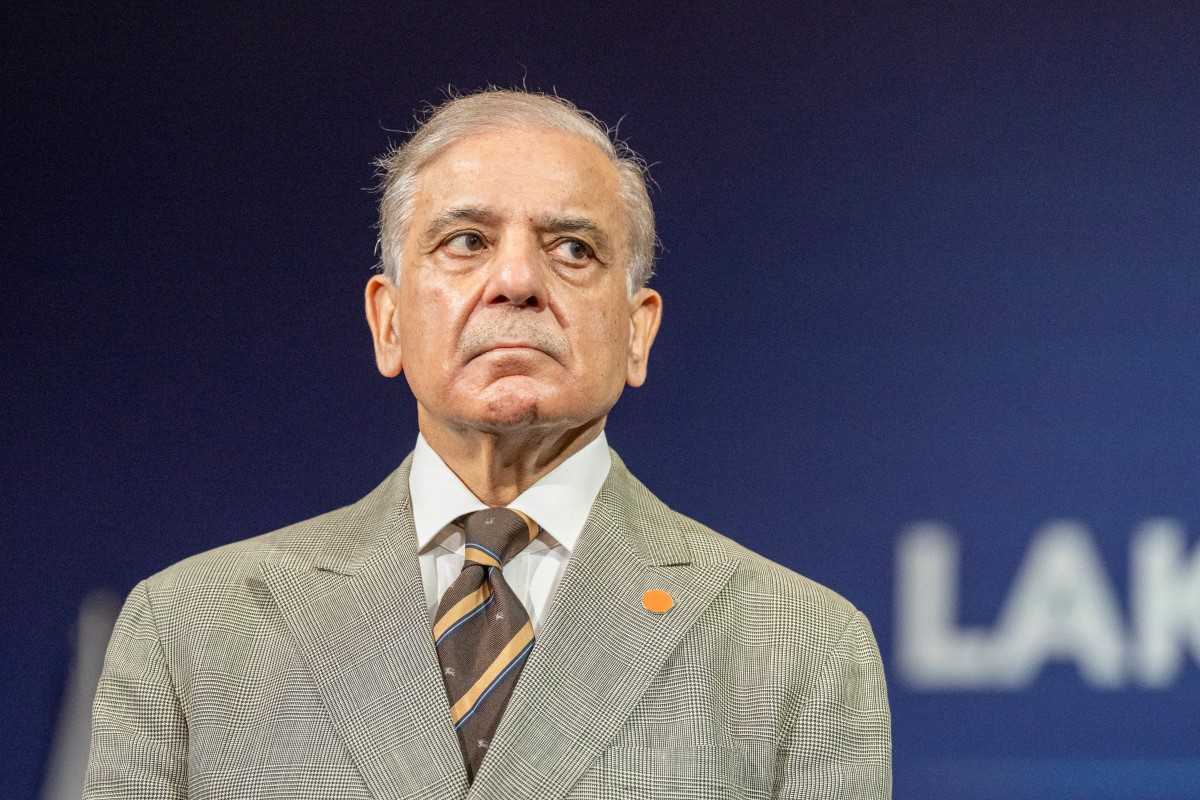
Pakistan's Prime Minister Shehbaz Sharif reacts prior to a quadrilateral meeting between the United States, Iran, Pakistan and Qatar at the Burgenstock luxury hotel complex overlooking Lake Lucerne, Switzerland, on June 21, 2026, as part of high-level talks aimed at advancing a deal to end the Middle East conflict.
AFP
Pakistan will continue supporting dialogue aimed at achieving a lasting resolution through diplomacy, Prime Minister Shehbaz Sharif said after US-Iran talks in Bürgenstock, Switzerland produced what mediators described as encouraging progress.
Sharif posted the remarks on X following the first High-Level Committee meeting held under the Islamabad Memorandum of Understanding.
What did Pakistan's PM Sharif say after the Switzerland talks?
Sharif said discussions were held in a positive and constructive atmosphere and that participants agreed on a roadmap to reach a final agreement within 60 days.
Alhamdulillah, the First High-Level Committee Meeting under the framework of the Islamabad Memorandum of Understanding has concluded successfully in Bürgenstock, Switzerland.
The discussions were held in a positive and constructive atmosphere and yielded encouraging progress,… pic.twitter.com/uvA0SBKfvf
— Shehbaz Sharif (@CMShehbaz) June 22, 2026
The meeting also established a High-Level Committee for political oversight and agreed to continue technical-level negotiations. He said Pakistan would continue playing what he called an honest and sincere role in facilitating dialogue.
Who did Sharif credit for advancing the US-Iran peace process?
Sharif praised the leadership of the United States and Iran for maintaining a commitment to constructive engagement. He thanked Qatar for helping create conditions for the negotiations and Switzerland for facilitating and hosting the talks. Sharif expressed special gratitude to Field Marshal Asim Munir, saying his dedication and perseverance had been instrumental in advancing the process.
He also praised Deputy Prime Minister and Foreign Minister Ishaq Dar and the Foreign Office team for their diplomatic efforts, while acknowledging the contribution of Interior Minister Mohsin Naqvi.
What did the US and Iran agree to at Burgenstock?
Separately, Pakistan and Qatar said the United States and Iran had agreed to establish communication channels to keep the Strait of Hormuz open and work toward ending fighting in Lebanon. Negotiations were led by U.S. Vice President JD Vance and Iranian parliament speaker Mohammad Bagher Ghalibaf under a two-month framework outlined in a preliminary agreement reached last week. In a joint statement, mediators confirmed the 60-day roadmap and said technical talks would continue throughout the week at Bürgenstock.
Pakistan and Qatar announced the creation of a contact mechanism to avoid incidents and miscommunication in the Strait of Hormuz. They also announced a deconfliction cell involving the parties and Lebanese authorities to help prevent renewed fighting in Lebanon. Iranian Foreign Minister Abbas Araghchi said Pakistani and Qatari mediation had delivered major progress toward ending the conflict in Lebanon.
What did Iran say it gained from the Switzerland negotiations?
Araghchi said oil and petrochemical exports had been exempted from restrictions, a blockade had been lifted, some frozen assets had been released, and a reconstruction and development plan for Iran had been launched. There was no immediate response from U.S. negotiators. Oil prices fell and most Asian stock markets rose after reports of progress boosted investor sentiment.
What tensions emerged during the first round of US-Iran talks?
The talks hit a snag when the Iranian delegation briefly walked out following comments by U.S. President Donald Trump warning Tehran against supporting Hezbollah in Lebanon. Trump warned of new attacks if Iran did not immediately stop support for what he called proxies in Lebanon. Ghalibaf responded by saying Iran's armed forces were prepared to react and that Tehran would act regardless of Washington's statements.
Israeli Prime Minister Benjamin Netanyahu said Israeli troops would remain in southern Lebanon for as long as necessary and reiterated that Israel would not allow Iran to acquire nuclear weapons. By Sunday evening, there were no reports of renewed Israeli strikes or fighting, and some residents in southern Lebanon had begun returning to their homes. Vance earlier described the Switzerland meeting as historic, asking whether relations in the Middle East could be changed permanently.
Iranian President Masoud Pezeshkian said Tehran would not relinquish its right to enrich uranium but repeated that Iran had no intention of building a nuclear bomb.


Comments
See what people are discussing