

Trump says he is losing patience with Iran after talks with China's Xi
Trump warns he is losing patience with Iran as nuclear talks stall, a ship is seized near the UAE, and Beijing agrees the Strait of Hormuz must stay open

News Desk
The News Desk provides timely and factual coverage of national and international events, with an emphasis on accuracy and clarity.
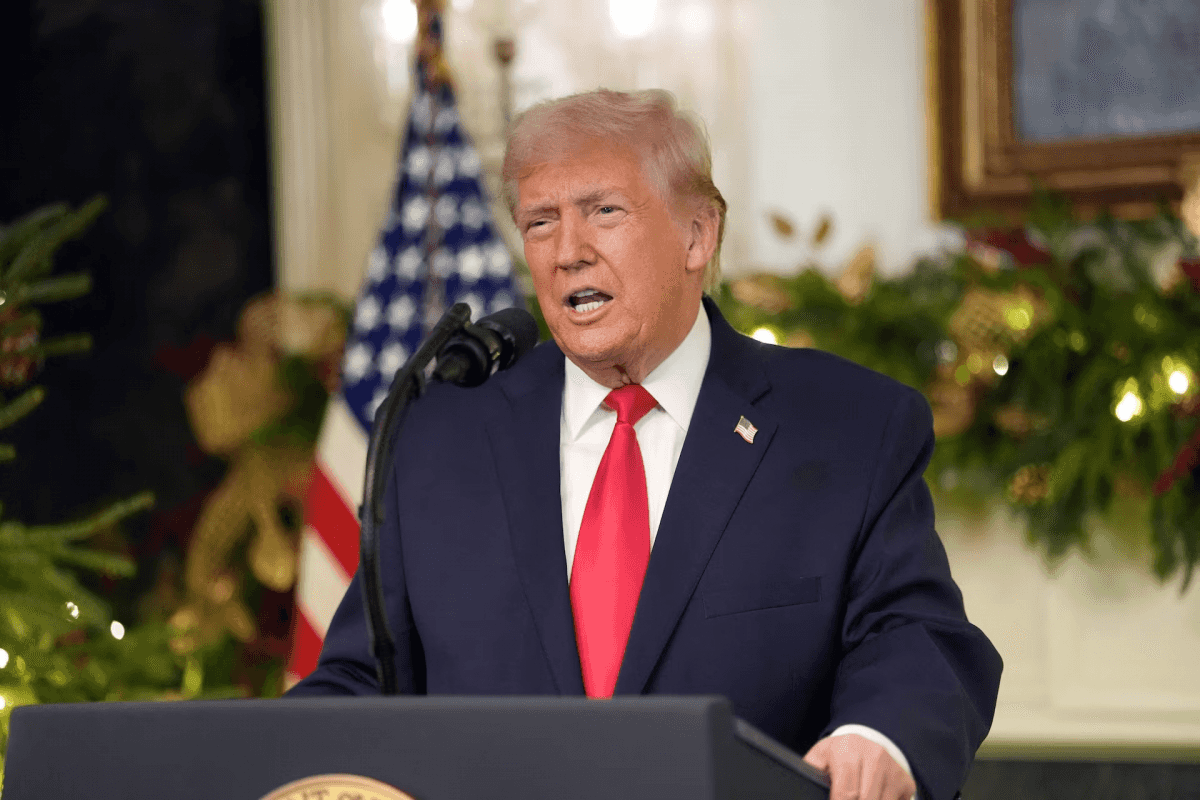
U.S. President Donald Trump
Reuters
U.S. President Donald Trump said Thursday that his patience with Iran was running out, following talks with Chinese President Xi Jinping in Beijing and a report that Iranian personnel had seized a ship off the United Arab Emirates.
The White House confirmed the two leaders had agreed on the need to keep the Strait of Hormuz open. Talks aimed at ending the conflict have stalled, with Iran refusing to abandon its nuclear program or surrender its enriched uranium stockpile.
What did Trump say about losing patience with Iran?
Trump said he would not be "much more patient" with Iran and urged Tehran to accept a deal.
Speaking on Fox News' "Hannity" program Thursday night, he made clear that a diplomatic resolution remained possible but that his tolerance was nearly exhausted. His remarks followed a day of escalating incidents on regional shipping routes and a high-stakes meeting with Xi.
What did Trump and Xi agree on during Beijing talks?
The White House said Trump and Xi agreed that the Strait of Hormuz must remain open to international shipping. Xi stated China's opposition to militarizing the waterway and to any effort to charge a toll for its use.
Xi also pledged not to supply Iran with military equipment, a commitment Trump described as significant.
Xi expressed interest in purchasing more American oil to reduce China's dependence on the strait. The two leaders also agreed that Iran must never obtain nuclear weapons. Tehran has denied seeking such weapons.
Why is the US blocking the Strait of Hormuz?
Iran effectively closed the waterway in response to U.S.-Israeli airstrikes that began on February 28, causing unprecedented disruption to global energy supplies.
Before the war, roughly one-fifth of global oil and liquefied natural gas supplies passed through the strait. The U.S. responded by pausing its attacks on Iran but imposing a blockade on the country's ports.
What is Trump's position on Iran's enriched uranium?
On the question of Iran's hidden uranium stockpile, Trump suggested physical possession by the U.S. mattered more for optics than for security.
"I don't think it's necessary except from a public relations standpoint," he said in the Fox News interview. Washington's formal position is that Tehran must hand over the uranium and halt further enrichment entirely.
What shipping incidents occurred near the Strait of Hormuz?
An Indian cargo vessel carrying livestock from Africa to the UAE was sunk Wednesday in waters off the coast of Oman. India condemned the attack and confirmed all 14 crew members had been rescued by the Omani coast guard. British maritime security firm Vanguard assessed the vessel was struck by a missile or drone.
Separately, British maritime agency UKMTO reported Thursday that unauthorized personnel had boarded a ship anchored off UAE's port of Fujairah and were steering it toward Iran. Vanguard said a company security officer reported the vessel was taken by Iranian personnel while at anchor. Fujairah is the UAE's sole oil port, positioned just outside the Strait of Hormuz.
Is the Strait of Hormuz beginning to reopen?
Iran appears to be negotiating passage agreements with individual countries on its own terms. A Japanese tanker crossed Wednesday after Japan's prime minister said she had requested help from Iran's president. Iran's Fars news agency reported Thursday that an agreement had been reached allowing some Chinese ships to pass.
Iran's Revolutionary Guards said 30 vessels had crossed since Wednesday evening, far below the 140 typical on a pre-war day but a substantial increase. Shipping analytics firm Kpler recorded around 10 transits in the past 24 hours, compared with five to seven daily in recent weeks.
How much has Iran's military capability been degraded?
A senior U.S. admiral told a Senate committee Thursday that Iran's ability to threaten its neighbors and U.S. regional interests had been significantly degraded. Admiral Brad Cooper said Iran "no longer threatens regional partners, or the United States, in ways that they were able to do before, across every domain." Cooper declined to directly address reports that Iran had retained significant missile and drone capabilities.
Thousands of Iranians were killed in U.S. and Israeli airstrikes during the opening weeks of the war. Thousands more have died in Lebanon since the conflict reignited fighting between Israel and Iran-backed Hezbollah. Talks between Lebanese and Israeli officials in Washington on Thursday were described as productive by a senior State Department official.
Why is China's role in the Iran conflict significant?
China is Iran's closest major partner and its primary oil buyer, giving Beijing meaningful leverage over Tehran. Trump is keen to secure Chinese support ahead of U.S. midterm elections in November, as the costly war has become an electoral liability. Analysts, however, doubt Xi will press Iran hard or cut off military support, given Iran's value as a strategic counterweight to U.S. influence in the region.
U.S. Treasury Secretary Scott Bessent, speaking from Beijing, said he believed China would "do what they can" to help reopen the strait, calling it very much in China's own interest. Diplomacy between Washington and Tehran has been on hold since last week, after both sides rejected each other's most recent proposals. Iran is seeking sanctions relief, war reparations, and formal acknowledgment of its control over the strait.




Comments
See what people are discussing