


News Desk
The News Desk provides timely and factual coverage of national and international events, with an emphasis on accuracy and clarity.
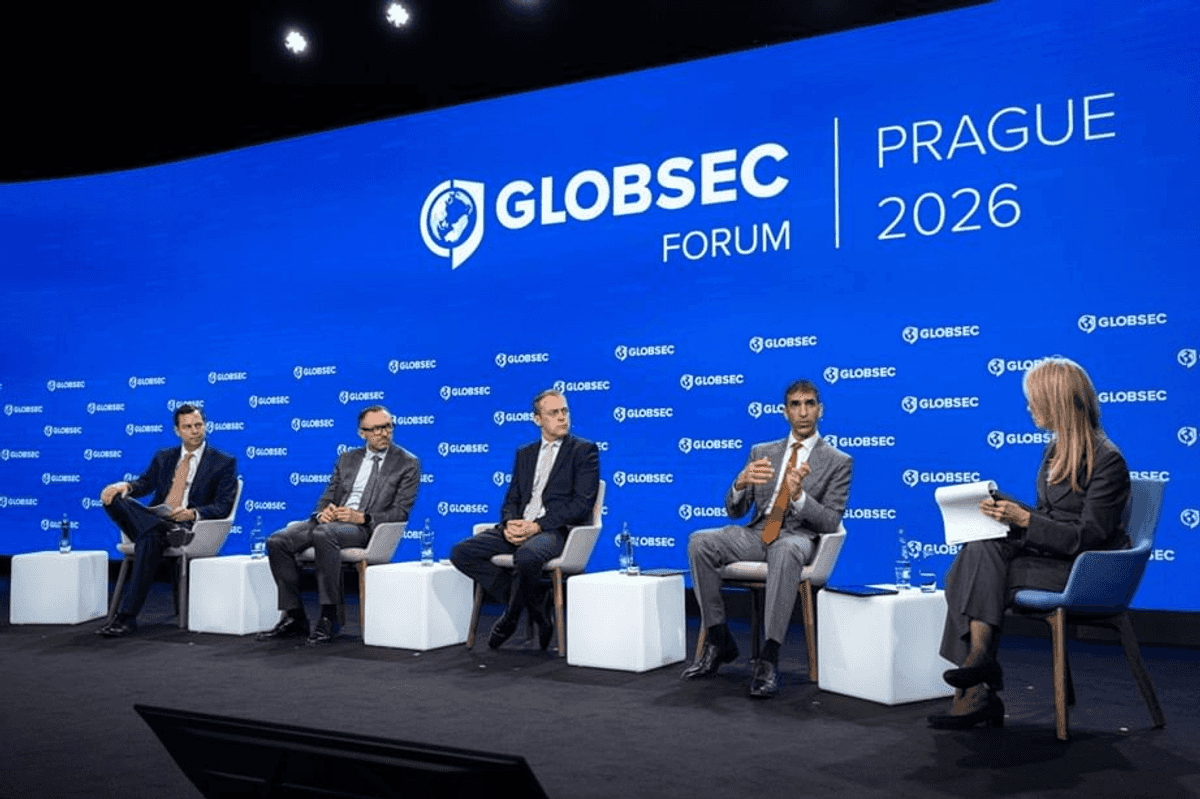
UAE Trade Minister Dr. Thani Al Zeyoudi addressed a GLOBSEC 2026 panel in Prague focused on the economic impact of the Iran war on global markets.
WAM
The United Arab Emirates has outlined a series of measures aimed at safeguarding trade flows amid escalating geopolitical disruptions, state news agency WAM reported, citing a senior minister.
UAE Minister of State for Foreign Trade Dr. Thani bin Ahmed Al Zeyoudi spoke at the GLOBSEC Forum 2026 in Prague, on a panel examining how the Iran war is reshaping global economies. His remarks reinforced the UAE's push to strengthen its position as a global logistics and investment hub.
What is the UAE doing to strengthen supply chain resilience?
The UAE activated contingency measures including alternative shipping routes through the eastern ports of Fujairah and Khorfakkan, and expanded air freight corridors for urgent pharmaceutical and food shipments.
The government also launched an AED 1 billion economic support package, focused on sustaining small and medium-sized enterprises. A five-pillar central bank framework was introduced to keep credit flowing to the private sector.
How is the UAE rerouting trade to manage regional disruptions?
Al Zeyoudi told policymakers and business leaders that the UAE had established new regional logistics links to maintain trade continuity. These include a "green corridor" with Oman and a Sharjah–Dammam trade route designed to streamline cargo movement across the Gulf. Both measures aim to reduce dependence on shipping lanes disrupted by regional tensions.
Al Zeyoudi said the disruptions had accelerated plans already underway. "The fundamental redesign of Gulf logistics that we were undertaking over a decade is now being compressed into years," he said. "This moment has accelerated existing plans and reinforced the importance of building an open, diversified and resilient trade architecture before it is needed."
How has the UAE's CEPA program supported its trade diversification strategy?
Al Zeyoudi highlighted the UAE's Comprehensive Economic Partnership Agreement program as a central pillar of its long-term trade resilience strategy. The initiative has produced 36 agreements spanning six continents and helped push the UAE's non-oil foreign trade to $1.03 trillion in 2025, according to official figures.
The CEPA program reflects the UAE's broader effort to diversify trade relationships and reduce exposure to any single corridor or market.
Al Zeyoudi was direct about the durability of those gains despite ongoing disruptions. "Nothing that we have achieved in the last five years has been undone or unwound," he said.
He described the UAE as "a bridge to high-growth markets across the Gulf, Africa and Asia," adding that its role as a trade, logistics and investment partner had grown more important amid the current environment.


Comments
See what people are discussing