


Zain Ul Abideen
Senior Producer
Zain Ul Abideen is an experienced digital journalist with over 12 years in the media industry, having held key editorial positions at top news organizations in Pakistan.
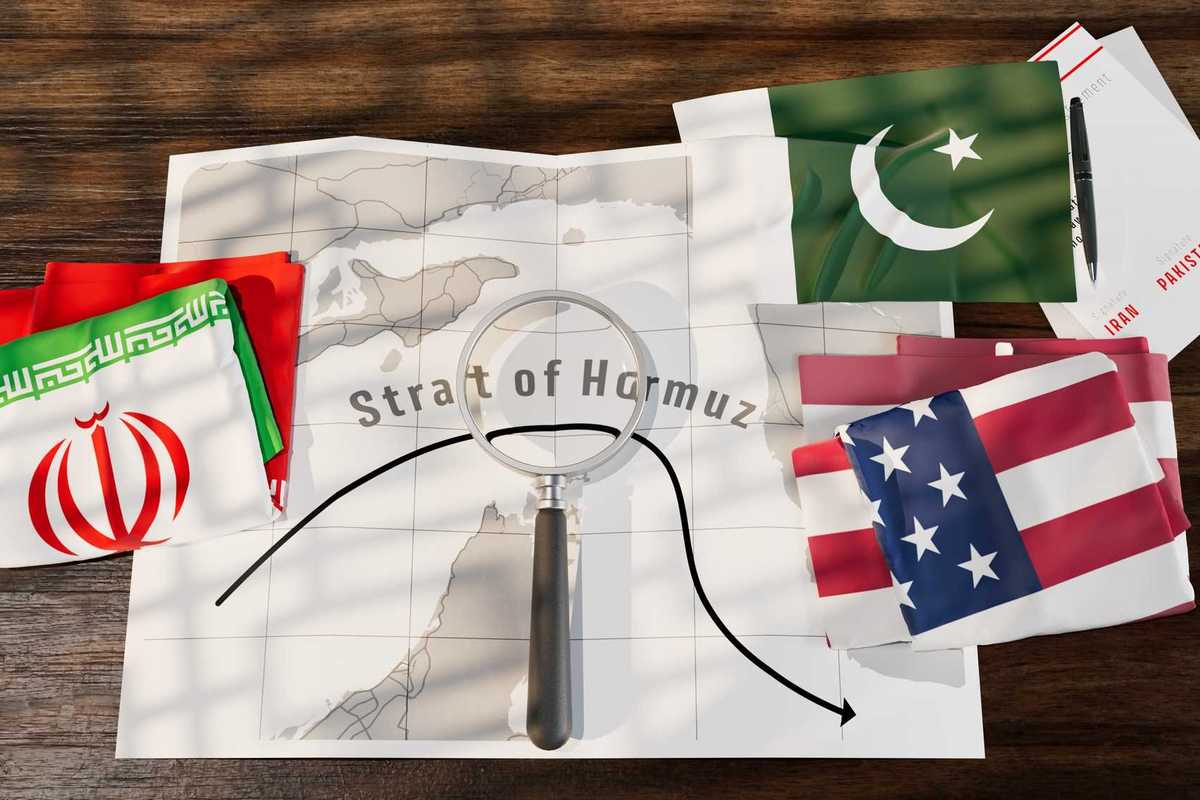
The U.S.-Iran deal marks a turning point, accelerating a geopolitical transition already underway across the Middle East.
Shutterstock
For decades, the Middle East operated under a relatively predictable power structure. The United States was the undisputed external guarantor of Gulf security. American military bases stretched across the region. Gulf monarchies relied heavily on Washington for defense, intelligence and diplomatic backing. Oil wealth flowed through a global system protected largely by U.S. naval and military supremacy.
That order has now been visibly reshaped.
The U.S.-Iran agreement to end the Middle East war, signed Wednesday, marks a major geopolitical reset after months of conflict that disrupted energy markets, threatened maritime trade and shut the Strait of Hormuz, a critical global shipping route.
The Islamabad Memorandum of Understanding was signed by U.S. President Donald Trump during a candlelit dinner at the Palace of Versailles following a G7 summit. Iranian Foreign Ministry spokesman Esmaeil Baqaei said the document “was finalized with the signatures of the presidents,” according to state media IRNA.
Prime Minister Shehbaz Sharif of Pakistan, which mediated the agreement, said on X that it “shall enter into force with immediate effect.”
The deal aims to draw a line under the war launched Feb. 28 by the United States and Israel, which triggered missile and drone exchanges across the region and effectively shut down the Strait of Hormuz.
Under the agreement, Iran will immediately reopen the waterway, while the United States will lift its naval blockade of Iranian ports. Washington will also issue sanctions waivers and move toward broader relief if a final nuclear agreement is reached within a 60-day negotiating period.
The deal also outlines a potential $300 billion reconstruction fund supported by regional partners and opens the door for the resumption of Iranian oil exports under a phased framework.
The erosion of unilateral dominance
The war and its resolution highlight the limits of unilateral power in the region.
Hasan Askari Rizvi, a political analyst, argues that the traditional Gulf security model dominated by the United States has been significantly weakened.
“The monopoly America had in the Gulf region appears to be weakening,” he said.
Rizvi added that the latest conflict and its diplomatic outcome have accelerated a shift away from exclusive reliance on Washington, as Gulf states reassess the risks of depending on a single external security guarantor.
Once regional states begin diversifying their strategic options, he said, the geopolitical map begins to change rapidly.
That shift is now visible not only in security thinking but also in diplomacy, where Washington is increasingly one of several competing power centers rather than the sole arbiter.
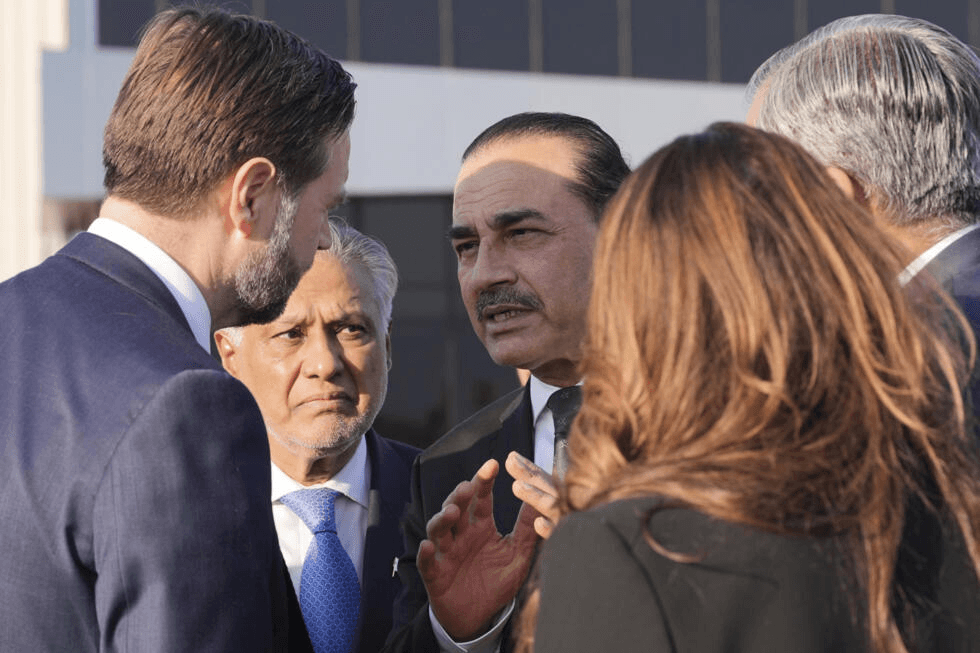 Pakistan's army chief, Field Marshal Asim Munir, took center stage at the talks, mediating the trilateral talks. AFP
China’s quiet rise in the Middle East
China’s expanding role in the region did not begin with this war. It began years earlier through economics, infrastructure and diplomacy.
A major turning point came in 2023, when China brokered the restoration of diplomatic ties between Saudi Arabia and Iran, two rivals whose tensions had shaped regional politics for years.
That agreement carried symbolism far beyond Riyadh and Tehran.
For the first time in decades, a major diplomatic breakthrough in the Gulf was delivered not by Washington, but by Beijing.
China’s strategy differs sharply from America’s. Beijing does not seek regional dominance through military alliances or troop deployments. Instead, it builds influence through trade, infrastructure financing, energy partnerships and long-term economic integration under initiatives like the Belt and Road Initiative.
Rizvi notes that China’s focus remains economic rather than military. But economic influence often translates into political leverage over time.
Even if Gulf maritime routes face instability, Beijing now maintains multiple economic corridors through Iran and Central Asia, reducing dependence on any single chokepoint.
A multipolar Middle East
The region emerging after the war may no longer revolve around one dominant power. Instead, it could evolve into a competitive network of overlapping alliances.
America will remain influential. Its military footprint, technology partnerships and financial leverage are too deeply embedded to disappear quickly. But Washington is increasingly one player among several rather than the uncontested center of gravity.
China will expand economically. Russia will attempt to preserve strategic relevance. Regional powers such as Turkey, India and Pakistan may also gain space to maneuver.
The result is a more fluid but also more unstable order.
Rizvi describes this as a “complex relationship” in which rivalry, cooperation and competition coexist simultaneously among multiple actors.
That complexity creates opportunities for agile middle powers, but also significant risks for states with weak economic fundamentals or inconsistent diplomacy.
Pakistan falls into both categories.
Pakistan’s balancing act
Pakistan’s strategic geography has always made neutrality difficult.
It shares a long border with Iran. China is its closest strategic partner. The Gulf hosts millions of Pakistani workers whose remittances remain vital for the economy. The United States still matters financially and diplomatically. Meanwhile, tensions with India and instability along the Afghan border continue to demand security attention.
Managing these relationships will become even more difficult in a fragmented regional environment.
Yet Pakistan also retains unusual diplomatic reach.
It maintains working ties with nearly all major players in the emerging order and is not viewed solely through a sectarian or ideological lens in the Middle East.
That gives Islamabad potential room to act as a facilitator rather than only a participant.
Pakistan’s role in mediating the latest U.S.-Iran agreement underscores that possibility.
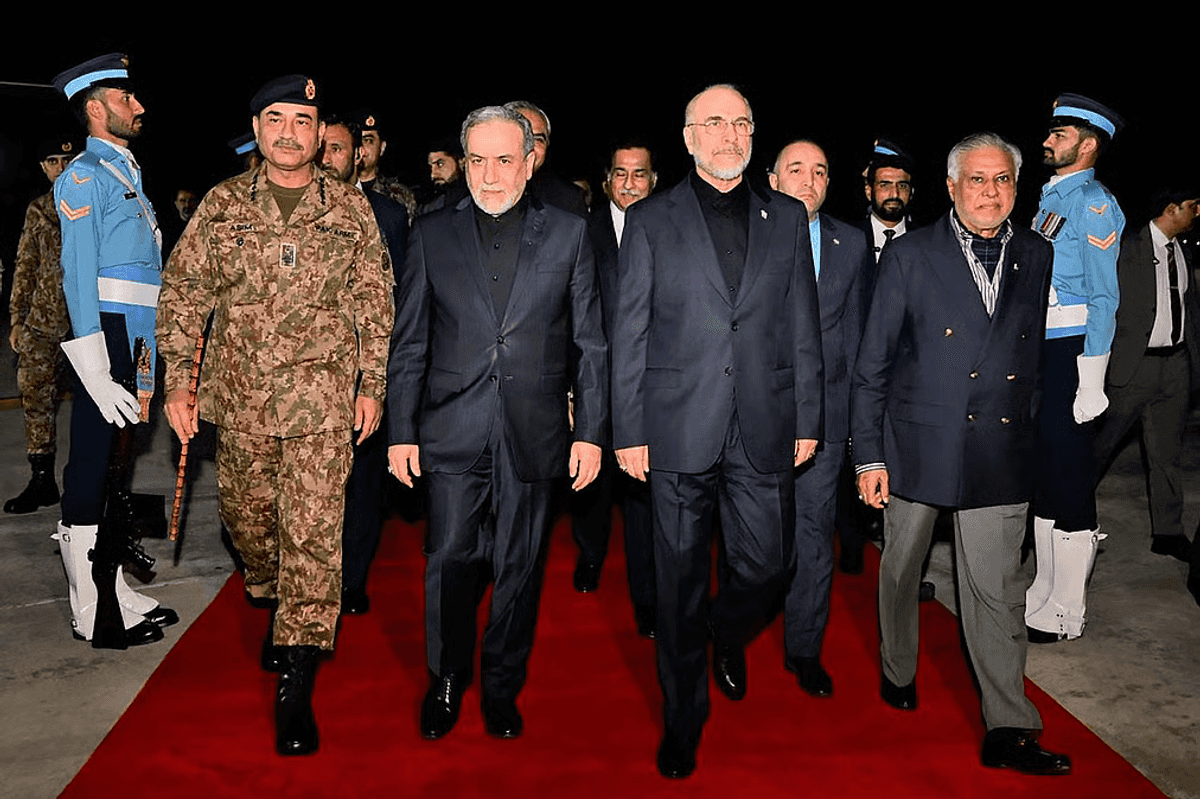 This handout photograph taken and released by Pakistan's Ministry of Foreign Affairs on April 11, 2026 shows Pakistan's Foreign Minister Ishaq Dar (2nd R) and Army Chief Syed Asim Munir (2nd L) walking with Iran's Foreign Minister Abbas Araghchi (centre L) and Iran’s Parliament Speaker Mohammad Bagher Ghalibaf (centre R) upon their arrival at Nur Khan air base in Rawalpindi, near Islamabad. AFP
Rizvi believes Pakistan could emerge as a credible middle power if it avoids entanglement in regional rivalries while expanding diplomacy, defense cooperation and trade relations.
But he also warns that such ambitions require economic strength that Pakistan still lacks.
A country dependent on IMF programs, facing debt pressures and internal political instability cannot easily sustain an ambitious foreign policy.
The Gulf factor and India’s expanding footprint
Another challenge for Islamabad lies in the changing Gulf landscape.
Growing cooperation among Gulf states, Israel and India is reshaping regional trade, technology and security networks in ways that complicate Pakistan’s position.
These emerging alignments could gradually shift economic and strategic priorities away from traditional partners.
At the same time, Pakistan cannot afford strained ties with Gulf capitals, where millions of its citizens work and send back critical remittances.
That requires increasingly sophisticated diplomacy that avoids rigid bloc alignment.
The danger of strategic overstretch
Pakistan has historically benefited from great-power competition. During the Cold War and the post-9/11 era, its geopolitical importance generated military and financial support from larger powers.
But the emerging order may function differently.
In a fragmented multipolar system, states without economic resilience risk becoming arenas of competition rather than independent actors.
That is Pakistan’s central risk.
If internal instability persists, geopolitical relevance may not translate into influence.
However, if economic reform and political stability are achieved, the shifting order could offer Pakistan a rare opportunity to redefine its international role.
A defining decade ahead
The U.S.-Iran agreement may not deliver a final resolution to regional tensions, but it signals a clear transition away from a system dominated by a single superpower.
A new order is emerging through negotiation, economic realignment and shifting alliances.
China’s rise, the weakening of unilateral U.S. dominance and the growing relevance of middle powers are all part of that transformation.
For Pakistan, the question is no longer whether the world order is changing.
The question is whether it is prepared to operate within it.



Comments
See what people are discussing