


News Desk
The News Desk provides timely and factual coverage of national and international events, with an emphasis on accuracy and clarity.
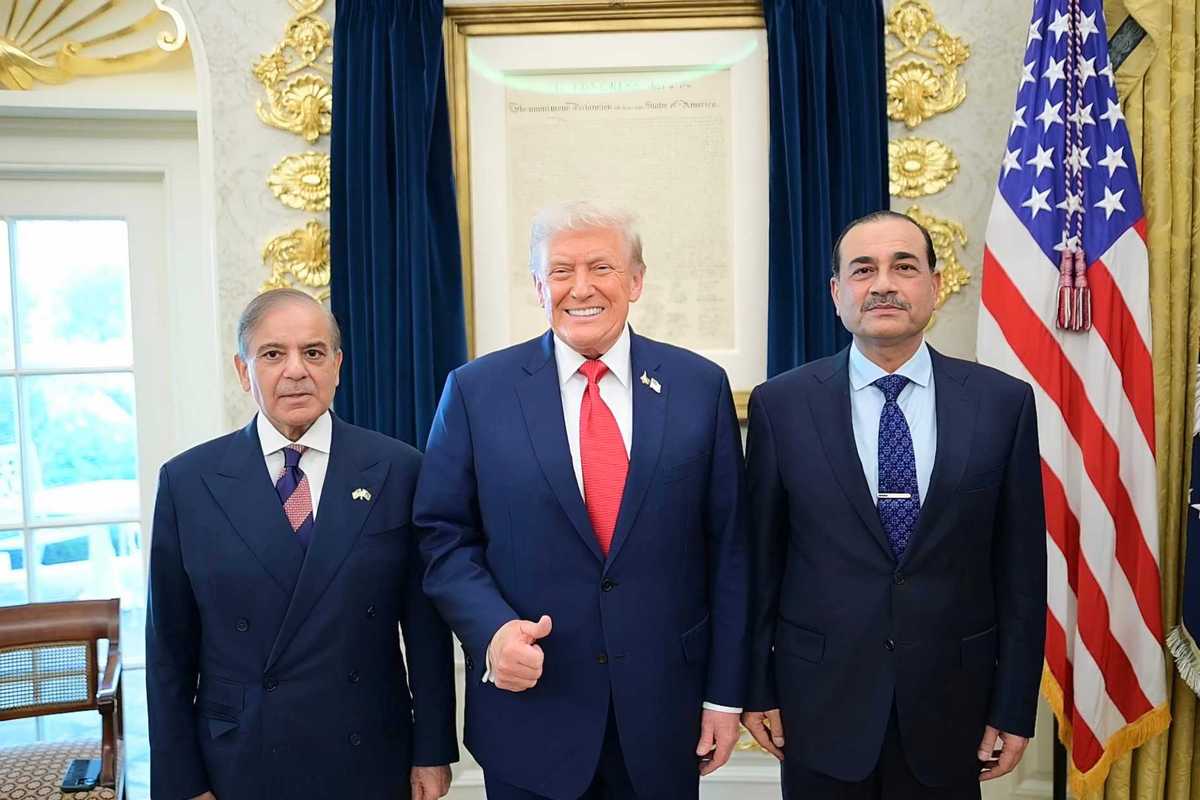
Courtesy: Government of Pakistan/X
A White House official on Monday said that a ceasefire proposal from Pakistan was “one of many ideas” being considered by the Trump administration, but President Donald Trump “has not signed off on it.”
“Operation Epic Fury continues,” the official told CBS News, noting that Trump is scheduled to speak at 1 p.m. on the war.
Iran rejected the idea of a ceasefire with the United States earlier in the day, saying any pause in fighting could allow its adversaries to regroup.
Foreign Ministry spokesperson Esmaeil Baqaei told reporters that Tehran would only consider arrangements including guarantees preventing renewed attacks.
“A ceasefire means a pause to rebuild forces for renewed attacks. No rational actor would accept that,” Baqaei said.
Iran’s demands must include “guarantees” to prevent a cycle of ceasefire and renewed conflict, he added, stressing that decisions related to national security “must ensure no further acts of aggression.”
Pakistan declines to confirm mediation role
Meanwhile, Pakistan refrained from confirming or denying reports of a proposed ceasefire framework aimed at ending the ongoing conflict involving Iran, the United States and Israel.
A spokesperson for Pakistan’s Foreign Office, Tahir Andrabi, responded to media reports suggesting Islamabad’s possible diplomatic role but declined to verify or reject the claims.
“We have seen various reports regarding a 45-day ceasefire proposal and a 15-point framework,” the spokesperson said. “However, we do not comment on specific or individual reports of this nature.”
The spokesperson said Pakistan supports diplomatic engagement and continues to advocate for de-escalation and peace in the region.
Reports outline two-stage truce plan
Reuters reported earlier that Iran and the United States were presented with a diplomatic plan to halt hostilities and reopen the strategic Strait of Hormuz. The outline, drafted under Pakistan’s mediation, envisions a two-stage process beginning with an immediate ceasefire followed by negotiations toward a broader settlement, according to a source cited by the news agency.
The proposal was exchanged with both Tehran and Washington overnight, the source said.
“All elements need to be agreed today,” the source told Reuters, adding that the initial understanding would be formalized through a memorandum of understanding exchanged electronically via Pakistan, which is serving as a communication channel in the talks.
A separate report by Axios on Sunday said the United States, Iran and regional interlocutors discussed a possible 45-day ceasefire within a two-phase deal that could lead to a permanent end to the war.
A Pakistani source said the country’s Army chief, Field Marshal Syed Asim Munir, had been in contact “all night long” with U.S. Vice President JD Vance, U.S. envoy Steve Witkoff and Iran’s Foreign Minister Abbas Araghchi to advance the draft plan.
Under the proposal, tentatively called the “Islamabad Accord,” hostilities would cease immediately and the Strait of Hormuz would reopen. Negotiators would have 15 to 20 days to finalize a comprehensive peace agreement, with in-person talks planned in Islamabad, the source said.
There was no immediate comment from U.S. or Iranian officials. Pakistan’s Foreign Office spokesperson declined to speak about the talks.
Iranian officials have previously told Reuters that Tehran wants a permanent ceasefire backed by assurances it will not face further attacks by the United States or Israel. They said Iran has received messages through mediators that include Pakistan, Turkey and Egypt.
The source said a final agreement is expected to include Iranian commitments not to pursue nuclear weapons in exchange for sanctions relief and the release of frozen assets.
However, two Pakistani sources said Tehran has not formally agreed to the proposal despite intensified diplomatic outreach.
“Iran has not responded yet,” one source said, adding that temporary ceasefire proposals supported by Pakistan, China and the United States have not drawn a commitment. There was no immediate response from Chinese officials to requests for comment.
The renewed diplomatic push comes amid rising tensions that have threatened shipping through the Strait of Hormuz, a vital corridor for global oil exports.
U.S. President Donald Trump has repeatedly called for a swift end to the conflict in recent days, warning of consequences if a ceasefire is not secured within a short timeframe.



Comments
See what people are discussing