Partner
US blockade of Iran ports threatens already crippled oil supply
Experts say US Navy is not going to confront Chinese, Indian and Pakistani merchant ships
Apr 14, 2026
Apr 14, 2026
Experts say US Navy is not going to confront Chinese, Indian and Pakistani merchant ships
Pakistani officials say Islamabad is their preferred venue, though no final decision has been made yet
Hezbollah leader calls US-mediated Israel-Lebanon talks 'futile' and urges scrapping them as Marco Rubio hosts the meeting with ambassadors
Wall Street Journal reports that the 20-year pause would come alongside sanctions relief
Eric Swalwell’s troubles escalated after reports cited allegations from four women, including a former staffer accusing him of sexual assault
JD Vance credits Pakistan’s premier and army chief as 'incredible hosts' and 'incredible statesmen' for mediating US-Iran talks
Iran’s envoy says the maritime blockade is also unlawful breach of fundamental principles of international law of the sea
US military says the blockade would apply to all ships leaving or seeking to dock at Iranian harbors
'We must always account for Israel’s potential to act as a spoiler,' says Hakan Fidan.
Iran’s military says if security of its ports in Persian Gulf and Arabian Sea is threatened, no port in the region will be safe
US president says he is 'not a big fan' of Pope Leo, calling him 'very liberal' and saying he does not believe in stopping crime
Prolonged talks risk undermining Trump’s 'no cards' claim, while escalation could endanger US forces and alienate voters amid rising fuel prices ahead of midterms
US says the blockade is enforced impartially on all vessels entering or leaving Iranian ports across the Arabian Gulf and Gulf of Oman
Mohammad Bagher Ghalibaf praises Pakistan’s role in talks, sends regards to its people after US-Iran negotiations stall
Iran's state broadcaster IRIB says negotiations stalled over 'unreasonable demands of the American side'
Pakistan’s Deputy Prime Minister and Foreign Minister Ishaq Dar on Sunday urged Washington and Tehran to uphold a ceasefire agreement after marathon negotiations in Islamabad ended without a deal to end the Middle East war.
“It is imperative that the parties continue to uphold their commitment to ceasefire,” Dar said in a brief statement broadcast by state media. He added that Pakistan, which hosted and mediated the talks, would continue facilitating engagement between the Islamic Republic of Iran and the United States.
“Pakistan has been and will continue to play its role to facilitate engagement and dialogue between the Islamic Republic of Iran and the United States of America in the days to come,” he said.
🔊PR No.1️⃣0️⃣0️⃣/2️⃣0️⃣2️⃣6️⃣
Remarks by the DPM/FM at the conclusion of the Islamabad Talks
🔗⬇️ pic.twitter.com/ySCYFStWSJ
— Ministry of Foreign Affairs - Pakistan (@ForeignOfficePk) April 12, 2026
Earlier, U.S. Vice President JD Vance confirmed that the talks concluded without an agreement after 21 hours of negotiations in the Pakistani capital. He said Washington had presented Tehran with its “final and best offer.”
“We leave here with a very simple proposal, a method of understanding that is our final and best offer. We’ll see if the Iranians accept it,” Vance told reporters.
Vance said the United States was seeking a “fundamental commitment” from Iran that it would not develop a nuclear weapon, adding that such assurances had not yet been provided. He indicated that Iran would be given additional time to consider the proposal.
The negotiations marked the highest-level meeting between the two sides since Iran’s 1979 Islamic Revolution. Washington had also announced a two-week pause in attacks with Israel pending the outcome of the talks.
The conflict intensified after the United States and Israel launched attacks on Iran on February 28, prompting retaliation from Tehran and triggering global economic turmoil.
Iran exercised leverage by asserting control over the Strait of Hormuz, a vital shipping route through which roughly one-fifth of the world’s oil transits. Rising tensions were compounded by U.S. statements that minesweeping ships had been sent through the waterway.
The U.S. military said two Navy warships transited the strait to begin clearing mines and ensure it remained a “safe pathway” for tankers. Iran’s military denied that any American warships had entered the waterway and warned of a severe response if they did.
“Any attempt by military vessels to pass through the Strait of Hormuz will be dealt with severely,” the Revolutionary Guards’ Naval Command said in a statement carried by state broadcaster IRIB. It added that Iran’s assurances of safe passage during the two-week ceasefire applied only to civilian vessels under specific conditions.
Iranian Parliament Speaker Mohammad Bagher Ghalibaf, who led the 70-member Iranian delegation alongside Foreign Minister Abbas Araghchi, expressed deep skepticism toward the United States upon arrival in Pakistan.
“Our experience in negotiating with the Americans has always been met with failure and broken promises,” Ghalibaf said.
Vance, however, said before departing the United States that Washington remained open to diplomacy if Iran negotiated “in good faith,” while warning that the United States would not be receptive if Tehran attempted to “play us.”
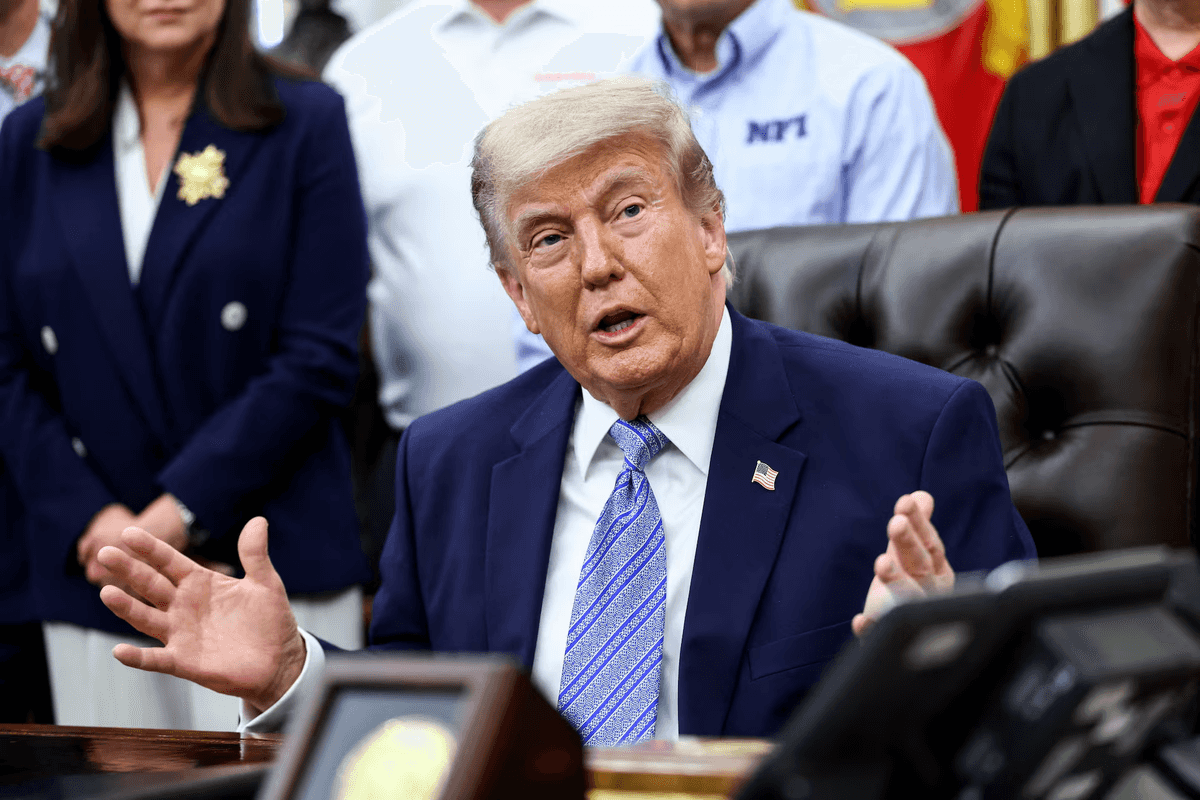
U.S. President Donald Trump also downplayed the importance of a negotiated outcome, saying during the talks that the United States had already achieved military success.
“Whether we make a deal or not makes no difference to me. The reason is because we’ve won,” Trump said, citing the killing of Iranian leaders and the destruction of key military infrastructure.
Iran has demanded the unfreezing of sanctioned assets and an end to Israel’s war against Hezbollah in Lebanon as part of any agreement, though Vance said the Lebanon issue would not be discussed in Islamabad.
Israel has maintained that the ceasefire does not apply to its operations in Lebanon. Lebanese authorities said Israeli strikes in the country’s south on Saturday killed 18 people, pushing the death toll from Israel’s operations since the conflict began past 2,000.
Israel and Lebanon are scheduled to hold separate talks next week in Washington. Israeli Prime Minister Benjamin Netanyahu said in a televised statement that he sought a peace agreement with Lebanon that “will last for generations,” while ruling out a ceasefire with Hezbollah.
Meanwhile, Iran has repeatedly denied seeking an atomic bomb, and the United Nations’ nuclear watchdog reported no imminent threat of Tehran developing nuclear weapons.
US vice president says he hears no 'affirmative commitment' from Iran to forgo nuclear weapons and is leaving after presenting a 'final and best offer'
Iran 'strongly rejects' Washington’s claims that US vessels enter Hormuz
Trump says 'deep negotiations' are underway but claims the US has already 'won', while a Pakistani official says talks are progressing in the 'right direction'
Pakistani official says that talks are 'progressing in the right direction' after two rounds