


News Desk
The News Desk provides timely and factual coverage of national and international events, with an emphasis on accuracy and clarity.
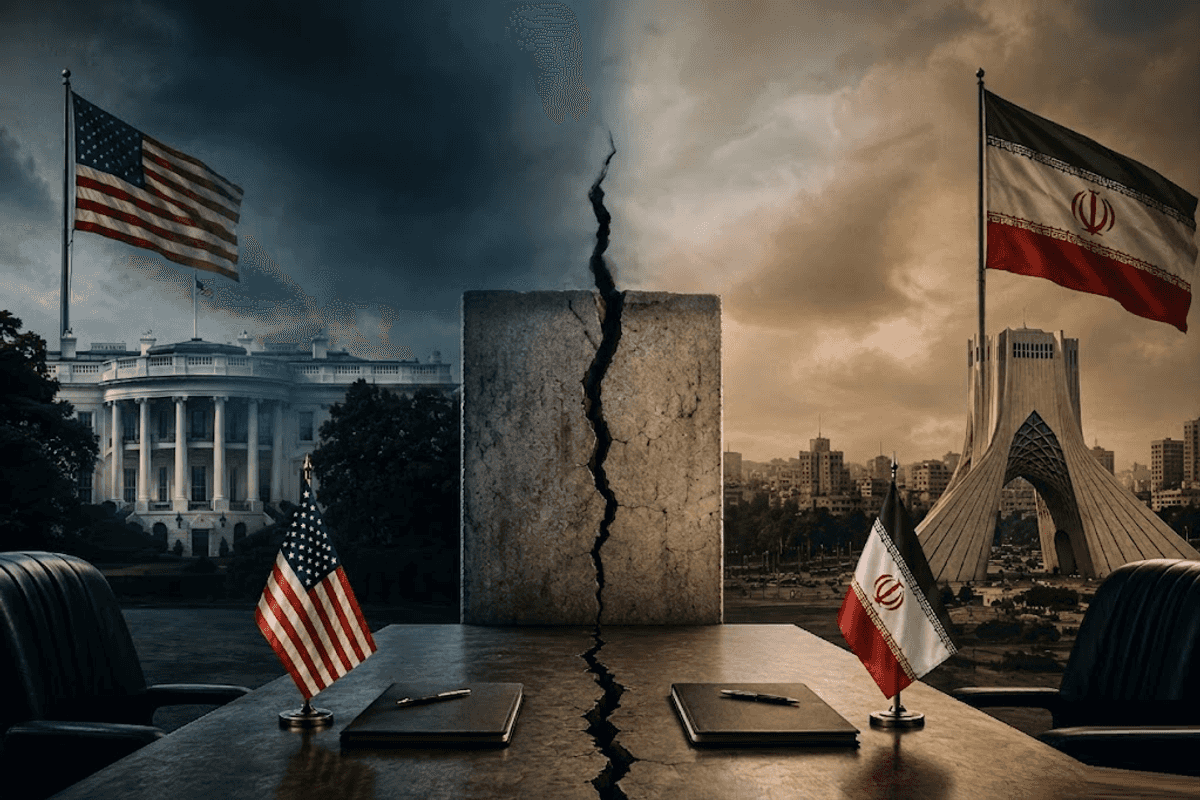
With the two sides deadlocked, Trump has shown little inclination to soften his approach despite growing frustration over the 11-week-old crisis.
AI generated
During his first year back in office, US President Donald Trump's aggressive negotiating style won concessions from countries on issues ranging from tariffs to armed conflict.
But with Iran, that same brand of coercive diplomacy, marked by public threats, insults and ultimatums, has hit a wall. Analysts warn it may be undermining his own efforts to end a war that has shaken the global economy, according to Reuters.
Why is Trump's Iran diplomacy not working?
Trump's approach combines maximalist demands, unpredictability and scathing public language, while insisting the US must be seen as the absolute victor. Analysts say no government, including Iran's, can afford to be seen as having capitulated. That framing makes a negotiated settlement structurally difficult to reach, regardless of the pressure applied.
"That inevitably gets in the way of reaching a reasonable deal because no government, not just Iran's, can afford to be viewed as having capitulated," said Rob Malley, a former Iran negotiator in the Obama and Biden administrations.
With the two sides deadlocked, Trump has shown little inclination to soften his approach despite growing frustration over the 11-week-old crisis. That does not bode well for a quick settlement, fueling fears the standoff and its unprecedented shock to world energy supplies could drag on indefinitely. Iran has essentially maintained a chokehold on the vital Strait of Hormuz, giving it considerable leverage throughout.
What has Trump said about Iran?
Trump's most alarming statement came last month when he threatened in a social media post to wipe out Iran's civilization unless it reached a deal. Administration officials told the Wall Street Journal the message was improvisational and had not been vetted as part of a national security strategy. Trump ultimately backed down and agreed to a truce.
Since his profanity-laced Easter Sunday threat to destroy Iran's bridges and power grid, he has repeated that warning multiple times, including to reporters aboard Air Force One returning from China on Friday. Last week, he told reporters they would know the ceasefire had collapsed if they saw "one big glow coming out of Iran," a remark some interpreted as a nuclear threat, though Trump has insisted he would never use nuclear weapons. He has also called Iran's leaders "crazy bastards," "lunatics" and "thugs."
Trump has repeatedly insisted Iran has been completely crushed, claimed Tehran was "begging" for a deal (only for Iran to deny it), and oscillated between demands for "unconditional surrender" and calls for a negotiated settlement. Iran, meanwhile, has framed its survival of the military campaign as a victory, arguing it has demonstrated the ability to exact a significant economic price.
"The lack of strategic patience and inconsistency of the president's rhetoric undercuts whatever message he wants to send," said Dennis Ross, a former senior Middle East adviser in Democratic and Republican administrations.
How is Trump's rhetoric affecting Iran negotiations?
Some of Trump's harshest statements, often posted on his Truth Social platform after midnight, have come at critical moments. Last month he abruptly announced a blockade of Iran's ports, prompting retaliation that imperiled the already-fragile ceasefire. On Monday, he dismissed the latest Iranian peace proposal as a "piece of garbage."
There has been no effort inside the White House to persuade Trump to moderate his messaging on Iran, according to two sources with knowledge of the matter who spoke on condition of anonymity. Iran's Deputy Foreign Minister Saeed Khatibzadeh was blunt in his assessment during a visit to Turkey last month. "He talks too much," he told reporters.
White House spokeswoman Olivia Wales defended Trump's approach, citing what she described as a "proven track record of achieving good deals" and said Iranians were showing increasing "desperation" for an agreement. "President Trump is a master negotiator who always sets the right tone," she said.
Could Trump's approach push Iran toward a nuclear weapon?
Former US officials who have negotiated with Iran say coercive pressure is unlikely to work, given the entrenchment of Iran's clerical and military establishment and the country's deep sense of national pride. Trump's approach may have emboldened Iran's new rulers, considered more hardline than their slain predecessors, who have even less trust in Washington after two rounds of US strikes while negotiations were still under way.
Barbara Leaf, former Middle East envoy under President Joe Biden, said Trump's Iran campaign has been hampered by "a giddy assumption that Iran was a Venezuela-like problem for resolution" and a "wholesale misunderstanding of the regime's inherent resilience."
Some experts warn the combined military campaign and coercive diplomacy could make Iran more, rather than less, likely to pursue a nuclear weapon, mirroring the logic of North Korea's deterrence strategy. Iran has long asserted its right to enrich uranium but insists the program is for peaceful purposes only.
What do analysts say about the Iran stalemate?
Trump and Iran appear to be operating on fundamentally different timelines. The president typically seeks a fast resolution and wants to move on, while Iranian delegations have a long history of prolonging talks. Trita Parsi, executive vice president of the Quincy Institute for Responsible Statecraft in Washington, said Tehran's leaders may be reading Trump's erratic approach as a sign of desperation and believe they can simply wait him out.
"In some ways, Trump plays right into their hands," he said. Abdulkhaleq Abdullah, an academic in the United Arab Emirates, said Trump could afford to tone down his rhetoric, but argued that Iran's intransigence deserves more of the blame for the current stalemate than Trump's "threats and bombastic comments."
The continuing impasse also comes as Trump faces domestic pressure over high US gasoline prices and low approval ratings, having embarked on an unpopular war ahead of November's midterm elections, with his Republican Party struggling to hold Congress.





Comments
See what people are discussing