

Trump returns from China with stability and a stalemate after Beijing summit
Trump's two-day Beijing summit with Xi Jinping produced modest deals but no breakthroughs on trade, Iran, or Taiwan

News Desk
The News Desk provides timely and factual coverage of national and international events, with an emphasis on accuracy and clarity.
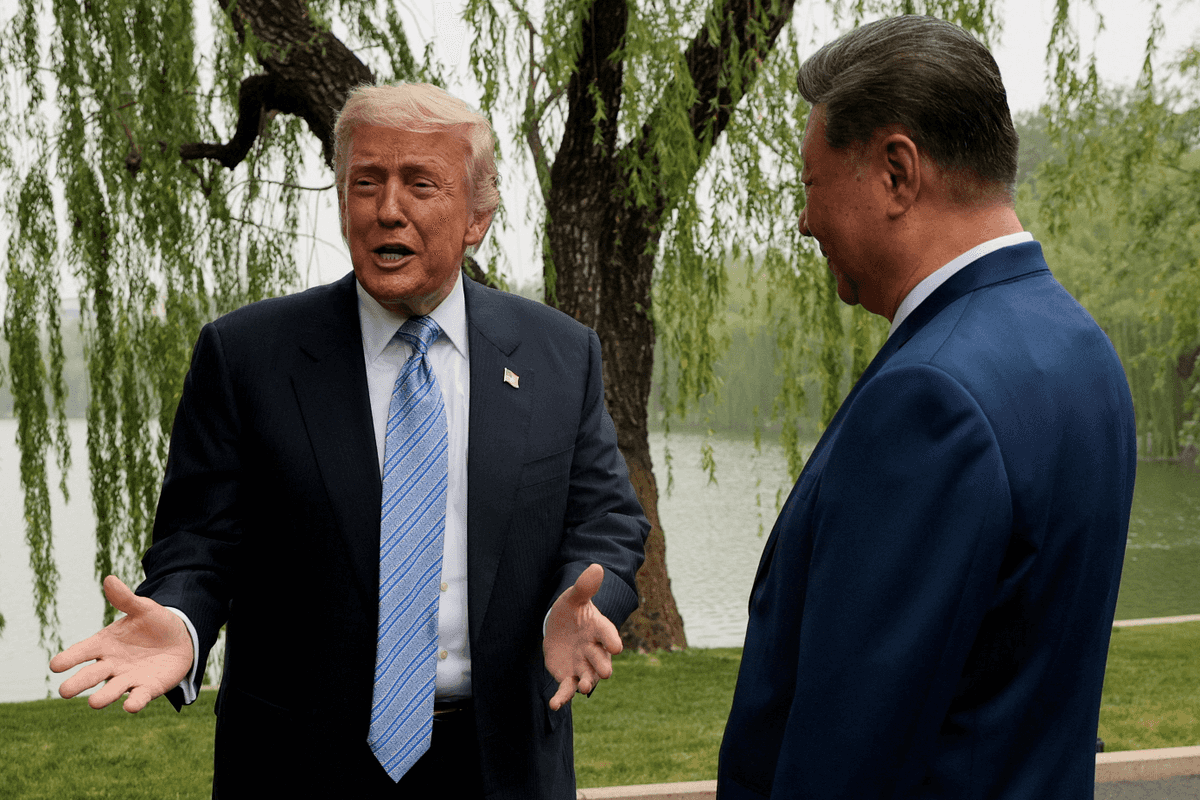
The summit produced limited commercial outcomes and no major strategic breakthroughs.
Reuters
President Donald Trump returned from a two-day summit with Chinese leader Xi Jinping in Beijing this week having achieved modest results by the standards of US-China meetings.
The talks underscored that despite last year's trade war and subsequent detente, Washington and Beijing remain locked in the same strategic contest Trump inherited at the start of his second term. Analysts say China came out ahead.
What did the Trump-Xi summit in Beijing actually achieve?
The summit produced limited commercial outcomes and no major strategic breakthroughs.
Trump announced Boeing had sealed a deal for China to purchase 200 jets, well below the 500 anticipated, and a new Board of Trade was established to explore lowering tariffs on non-sensitive goods. China made no public commitment to help the US resolve the Iran war.
Who came out ahead from the Beijing talks?
China benefited most from a return to predictability after the extremes of last year's trade war, according to Scott Kennedy, a China expert at Washington's Center for Strategic and International Studies.
"Compared to where we were a year ago, with 145% tariffs," Kennedy said, the two sides had effectively returned to a familiar standoff. Xi described the new dynamic as "constructive strategic stability."
Trump brought some of America's most powerful executives to Beijing, including Tesla's Elon Musk and Nvidia's Jensen Huang, but most had little to show beyond attending a lavish banquet.
The meeting produced no breakthrough on selling Nvidia's advanced H200 AI chips to China, to the relief of China hawks in both parties who had warned against feeding China's AI development. Wendy Cutler, a former acting deputy US Trade Representative, called the economic deliverables "way below expectations."
What happened to the US-China trade truce?
A person familiar with the negotiations told Reuters that China wanted a longer extension of the existing trade truce than the Trump administration was willing to offer.
China also sought reassurances over pending US investigations likely to revive tariffs struck down by the Supreme Court this year. Neither side put much on the table, with some commercial deals potentially held back for the autumn, when Xi is expected to visit the White House.
The summit's thin commercial results stand in contrast to Trump's 2017 China visit, when companies signed deals and memorandums of understanding valued at $250 billion. Senior Trump administration officials had downplayed expectations ahead of the meeting, saying there was no urgency to extend the trade truce before it expires in five months.
The White House said Trump had "leveraged his positive relationship" with Xi to bring home deliverables including agricultural agreements and the Boeing sale.
What does the stalemate mean for the US-China relationship?
For the United States, the familiar standoff leaves the most troubling aspects of the relationship unaddressed, from Beijing's trade practices to its military build-up in the Indo-Pacific.
With last year's trade war, analysts say Trump overestimated the power of tariffs to force unilateral Chinese concessions. Beijing retaliated with its own hikes and threatened to cut off critical mineral supplies, forcing an uneasy truce.
"The summit projected stability but it left the stalemate intact," said Craig Singleton, a China expert at the Foundation for Defense of Democracies.
China, meanwhile, appears content with the fragile arrangement as it manages a weak domestic economy and builds the technologies it hopes will give it an edge in long-term competition with the US. Cui Shoujun, a professor of international affairs at Renmin University in Beijing, said the summit showed both sides now acknowledge "the long-term nature of competition and disagreement" rather than seeking a return to a cooperative era.



Comments
See what people are discussing