

Pakistan ship breakers seek tariff reforms, tighter import controls ahead of federal budget
The Pakistan Ship Breakers Association has called for customs duty changes and stricter import oversight to protect Gadani's ship recycling industry and 500,000 jobs

News Desk
The News Desk provides timely and factual coverage of national and international events, with an emphasis on accuracy and clarity.
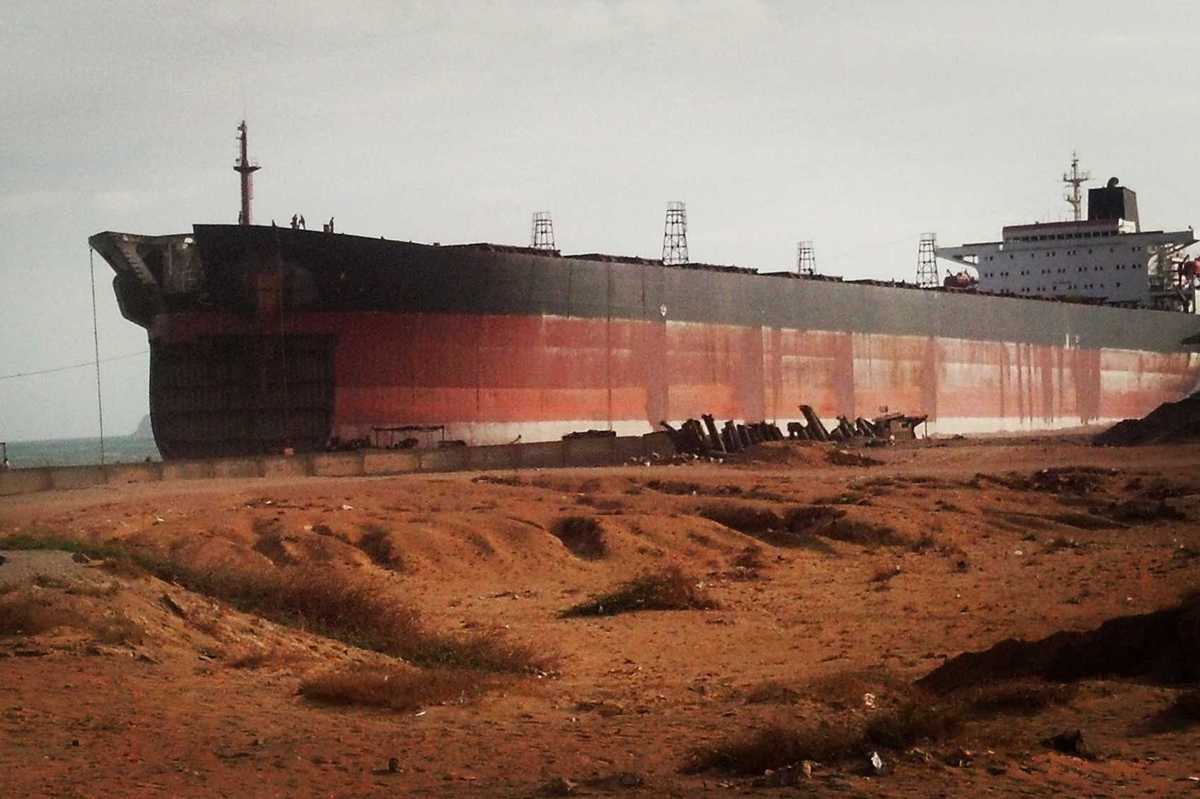
Cargo ship being scrapped on the Gadani beach, Balochistan.
Courtesy: Wikimedia Commons
The Pakistan Ship Breakers Association (PSBA) has urged the government to introduce tariff and tax reforms in the upcoming federal budget, saying the ship recycling industry at Gadani faces growing pressure from low-cost steel scrap imports and alleged tax evasion in the broader steel sector.
What is the Pakistan Ship Breakers Association asking for in the budget?
The PSBA is calling for higher customs duties on imported re-rollable scrap, stricter oversight of steel imports through land routes, and amendments to the sales tax rules governing ship breaking.
The association says these changes are needed to protect the Gadani ship recycling industry, which directly employs more than 25,000 workers and supports around 500,000 jobs nationwide during peak activity.
Why does the ship breaking industry say imports are a threat?
The PSBA argues that low-cost, low-grade scrap imports are undermining locally produced ship plates and re-rollable scrap from Gadani's recycling yards. It has called for higher customs duties and regulatory taxes on such imports to level the playing field for domestic operators.
The association says restricting these imports would help sustain ship breaking operations, preserve jobs in Balochistan and support downstream steel industries across Pakistan.
The industry contributes more than PKR 16 billion annually to the federal government and generates additional revenue for the Balochistan provincial government, according to the association.
What tax evasion concerns has the PSBA raised?
The PSBA has urged authorities to strengthen oversight of steel scrap and steel product imports through land routes, alleging that billions of rupees in taxes are being lost through misdeclaration, under-invoicing and misuse of industrial import concessions. It says some importers are clearing goods under incorrect tariff classifications and using industrial entities' names to avoid taxes while claiming sales tax adjustments they are not entitled to.
To address the issue, the association proposed banning steel melting units and furnaces from importing re-rollable scrap, secondary hot-rolled plates and steel profiles under specific tariff codes. The PSBA said such materials are not genuine raw materials for melting furnaces and are often diverted to re-rolling mills after being cleared under concessional duty structures. It said the practice creates unfair competition for tax-compliant businesses and causes significant losses to government revenues.
How does the PSBA want sales tax rules changed for ship recycling?
On taxation, the PSBA has requested amendments to the sales tax regulations that govern ship breaking activities. The industry currently pays sales tax on the assumption that 85% of its output is re-rollable scrap, despite producing both re-rollable and heavy melting scrap.
The association has proposed recognizing the actual production mix as 50% re-rollable scrap and 35% heavy melting scrap, saying the change would create a fairer assessment system without reducing overall tax collections.
The PSBA also sought full sales tax refunds on exports of scrap generated through ship recycling operations. It said growing global demand for recycled steel, driven by efforts to reduce carbon emissions, is creating new export opportunities.
Allowing refunds on exported scrap would improve the competitiveness of Pakistani exporters, help generate foreign exchange earnings and encourage new investment in the sector, the association said.
What are the PSBA's concerns about sanctioned vessels?
The association has called for strict monitoring of vessels imported for dismantling to prevent the entry of ships subject to sanctions imposed by the United States, the United Nations or the European Union.
It warned that processing sanctioned vessels could expose Pakistan, its banking sector and the ship recycling industry to secondary sanctions and could undermine efforts to improve international compliance standards.
The PSBA said local ship recyclers are investing to comply with the Hong Kong International Convention for the Safe and Environmentally Sound Recycling of Ships, aimed at strengthening Pakistan's standing in the global market.
Describing ship recycling as a source of green steel, the association said the industry contributes to lower carbon emissions and could help Pakistan benefit from emerging carbon credit markets while supporting sustainable industrial development.



Comments
See what people are discussing