

Shehbaz Sharif tells Pezeshkian dialogue is key to ending regional tensions
The meeting at COP31 focused on regional tensions, stronger ties and sustained diplomacy, according to an official statement

News Desk
The News Desk provides timely and factual coverage of national and international events, with an emphasis on accuracy and clarity.
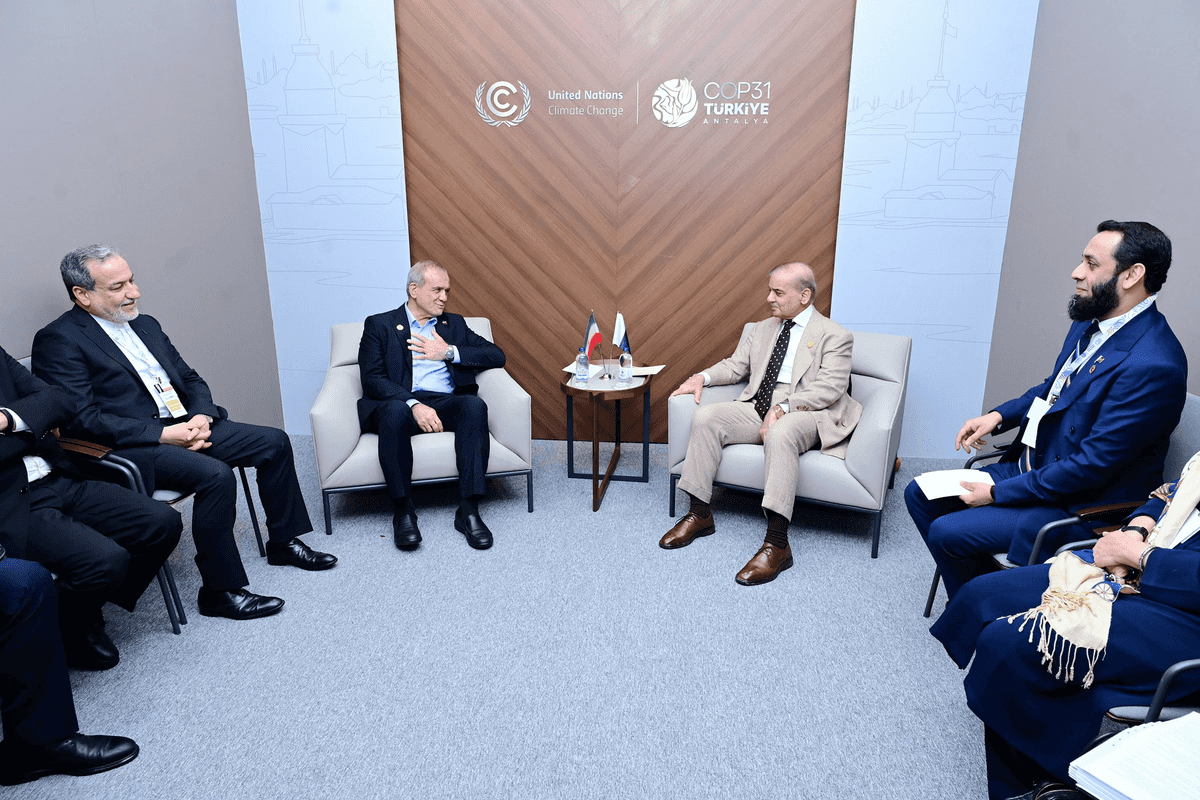
The two leaders reaffirmed longstanding bilateral ties and called for stronger cooperation across various sectors.
GovtofPakistan/X
Pakistan Prime Minister Shehbaz Sharif and Iranian President Masoud Pezeshkian discussed regional tensions and the need for sustained diplomatic engagement to secure lasting peace on Wednesday.
The leaders met on the sidelines of the COP31 climate summit in Turkey, Pakistan’s government said.
What did Shehbaz Sharif and Pezeshkian discuss at COP31?
The two leaders reaffirmed longstanding bilateral ties and called for stronger cooperation across various sectors.
وزیراعظم محمد شہباز شریف کی COP31 سربراہی اجلاس میں شرکت کے لیے دورہ ترکیہوزیراعظم محمد شہباز شریف اور ایرانی صدر ڈاکٹر مسعود پزشکیان کے درمیان ملاقات شروعملاقات میں پاکستان اور ایران کے درمیان دوطرفہ تعلقات اور باہمی تعاون کے فروغ پر تبادلہ خیال ہوگا۔دونوں رہنماؤں کے درمیان علاقائی صورتحال اور خطے میں امن و استحکام سے متعلق امور بھی زیر بحث آئیں گے۔
— Government of Pakistan (@GovtofPakistan) November 11, 2026
They also exchanged views on the evolving regional situation and agreed to maintain regular consultations and close coordination to address shared challenges and pursue emerging opportunities, according to an official statement.
What did each leader say during the meeting?
Sharif expressed deep concern over the prolonged conflict in the region, stressing the need for dialogue, restraint and de-escalation to prevent further tensions and promote stability. He also called for progress on understandings reached under the Islamabad Memorandum of Understanding in June 2026, reaffirming Pakistan’s commitment to a constructive diplomatic role in promoting regional peace and stability.
Pezeshkian welcomed Pakistan’s continued diplomatic support for Iran and praised its efforts to advance regional peace and security, the statement said. He highlighted the historical, cultural and religious ties between the two countries, which date back centuries, and expressed Tehran’s desire to expand cooperation with Islamabad across different sectors.
The two sides reaffirmed their commitment to working together for regional peace, security and prosperity. The meeting was also attended by Pakistan’s Information Minister Attaullah Tarar, Senator Sherry Rehman and senior officials from both countries.
What is Pakistan’s role in US-Iran mediation?
Pakistan has emerged as a key intermediary between Washington and Tehran since the conflict escalated in February 2026. It has used its diplomatic ties with both countries to facilitate negotiations and prevent a wider regional confrontation.
Islamabad hosted direct US-Iran peace talks in April, with Deputy Prime Minister and Foreign Minister Ishaq Dar and Army Chief Field Marshal Asim Munir playing central roles in mediation. Pakistan also helped secure a ceasefire in April after an intensive diplomatic push involving contacts with senior officials from both sides.
The diplomatic efforts culminated in the signing of the Islamabad Memorandum of Understanding on June 17, 2026, providing a framework for further engagement between the two countries. Pakistan subsequently facilitated follow-up discussions involving the United States, Iran and Qatar in Switzerland on June 21 to advance its implementation.
What is the latest on Pakistan’s mediation efforts?
The diplomatic process was disrupted when hostilities resumed, prompting Islamabad to intensify efforts to bring the two sides back to negotiations. Pakistan has continued its mediation through high-level diplomatic contacts, including two visits to Tehran by Munir in October.
During a visit on October 20, Pezeshkian discussed mediation efforts and regional developments with the Pakistani army chief. Tehran indicated that it was unwilling to resume negotiations with Washington until its demands were addressed, highlighting the challenges facing Islamabad’s diplomatic initiative.




Comments
See what people are discussing