

IMF says Pakistan should let rupee absorb external shocks, continue FX market reforms
Fund warns reserves are too low to support fixed exchange rate, flags risks in banking and microfinance sectors

Business Desk
The Business Desk tracks economic trends, market movements, and business developments, offering analysis of both local and global financial news.
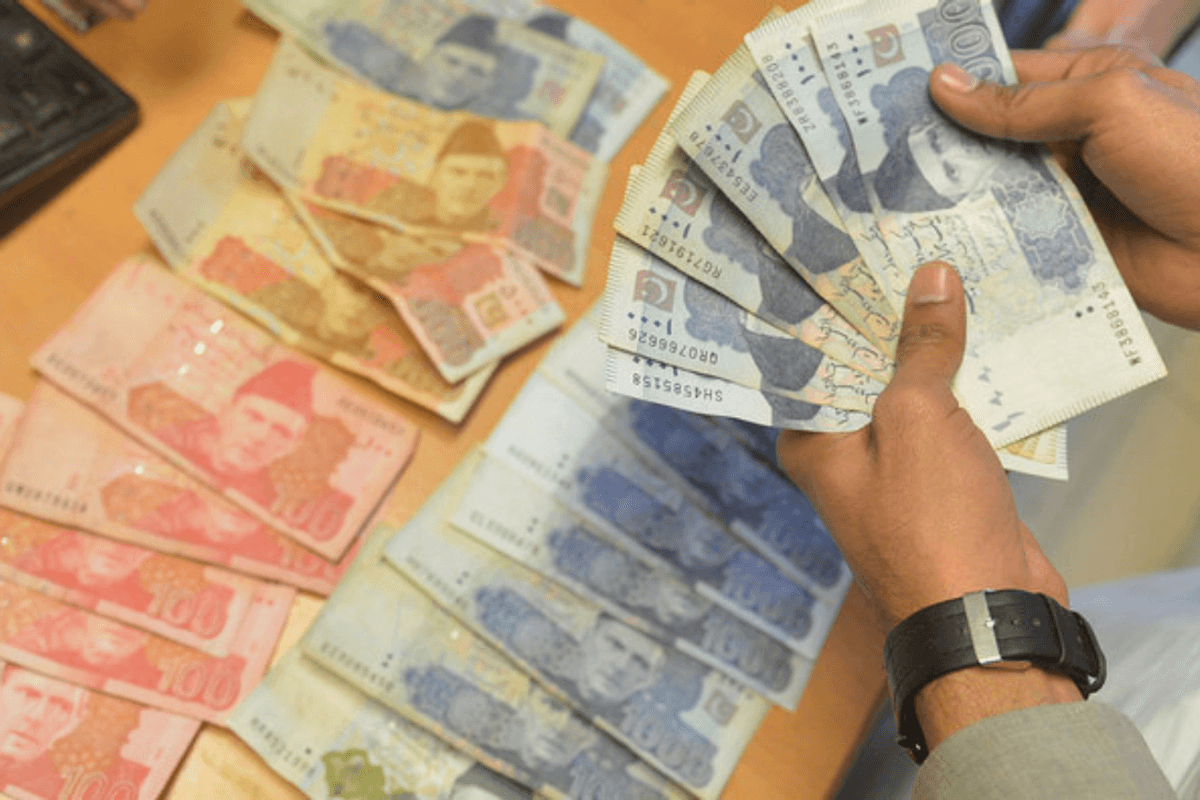
Pakistan should allow the exchange rate to remain the primary shock absorber against external pressures while continuing reforms to deepen and gradually liberalize the foreign-exchange market, the International Monetary Fund said in its latest assessment of the country’s economy and financial sector.
The IMF said the State Bank of Pakistan had made progress in rebuilding foreign-exchange buffers through proactive reserve accumulation, but warned reserve levels remained inadequate to support any fixed exchange-rate arrangement.
“Reserve cover remains too low by standard reserve metrics, and certainly inadequate to support any specific exchange rate,” the IMF said, adding that exchange-rate flexibility should remain the “first line of defense” if external pressures intensify.
The lender said Pakistan was facing its largest external shock since the 2022-23 economic crisis and stressed that a market-driven exchange rate would allow the interbank market to balance foreign-currency supply and demand efficiently.
The IMF urged authorities to continue reforms aimed at deepening the foreign-exchange market, including improving infrastructure for cross-border payments and reducing remittance costs. The central bank is expected to complete a comprehensive assessment of remittance costs by May 2026 under structural benchmarks agreed to in the IMF program.
Over the medium term, the IMF said gradual and carefully sequenced liberalization of the foreign-exchange regime could help attract foreign inflows, deepen market liquidity and improve the operating environment for domestic businesses.
To support the process, the SBP has committed to preparing a roadmap by March 2027 for phased, conditions-based liberalization of the foreign-exchange market.
The IMF also recommended reversing restrictions introduced in January 2022 that shortened the repatriation period for export proceeds. The Fund classified the measure as a capital flow management restriction and said it should be unwound once macroeconomic and balance-of-payments stability is restored.
On the banking sector, the IMF said Pakistan’s financial system remained liquid and profitable, largely because of banks’ significant investments in government securities. However, it cautioned that the heavy concentration in sovereign debt exposed the sector to financial stability risks and highlighted the need for bond market development and diversification of the investor base.
The Fund noted that a previously undercapitalized private bank met regulatory capital requirements by December 2025, but said continued close supervision would be necessary to maintain adequate buffers against potential economic shocks.
The IMF expressed concern about the microfinance banking sector, where four of 11 institutions remain undercapitalized, resulting in a negative overall capital adequacy ratio for the segment.
“The SBP is committed to addressing the capital shortfall and should take decisive actions to review microfinance banks’ business models,” the report said.
The lender also emphasized the importance of providing clarity on Pakistan’s transition toward a constitutionally mandated interest-free financial system after 2027.
According to the IMF, authorities are preparing a comprehensive financial-sector strategy, due by June 2026, outlining the legal, regulatory and operational roadmap for transitioning toward a “riba”-free economy.
The strategy is expected to define the future treatment of conventional banking liabilities, implications for monetary policy, public debt management and supervision of financial institutions.
The IMF also noted Pakistan’s growing regulatory framework for virtual assets. It said the Virtual Assets Bill, passed by Parliament in March 2026, formally established the Pakistan Virtual Assets Regulatory Authority to oversee the sector.
Authorities have pledged to address remaining regulatory gaps to align the framework with international standards, the Fund said, adding that efforts to integrate virtual assets into the economy should remain consistent with broader macro-financial policies.
On anti-money laundering and counterterror financing measures, the IMF said Pakistan continued strengthening its regulatory framework, particularly to combat trade-based money laundering.
The Fund said the National AML/CFT Authority was coordinating reforms in several areas, including improving supervision of designated nonfinancial businesses and professions, enhancing the accuracy of beneficial ownership information maintained by the Securities and Exchange Commission of Pakistan, and strengthening monitoring mechanisms against trade-based money laundering.
The IMF highlighted development of a price verification database and greater interagency data sharing as key reforms needed to improve oversight of import payments, customs declarations and foreign-exchange transactions.
It added that closer coordination among customs authorities, financial regulators and foreign-exchange monitoring systems would help mitigate macroeconomic and transaction-level risks linked to illicit trade and capital flows.





Comments
See what people are discussing